

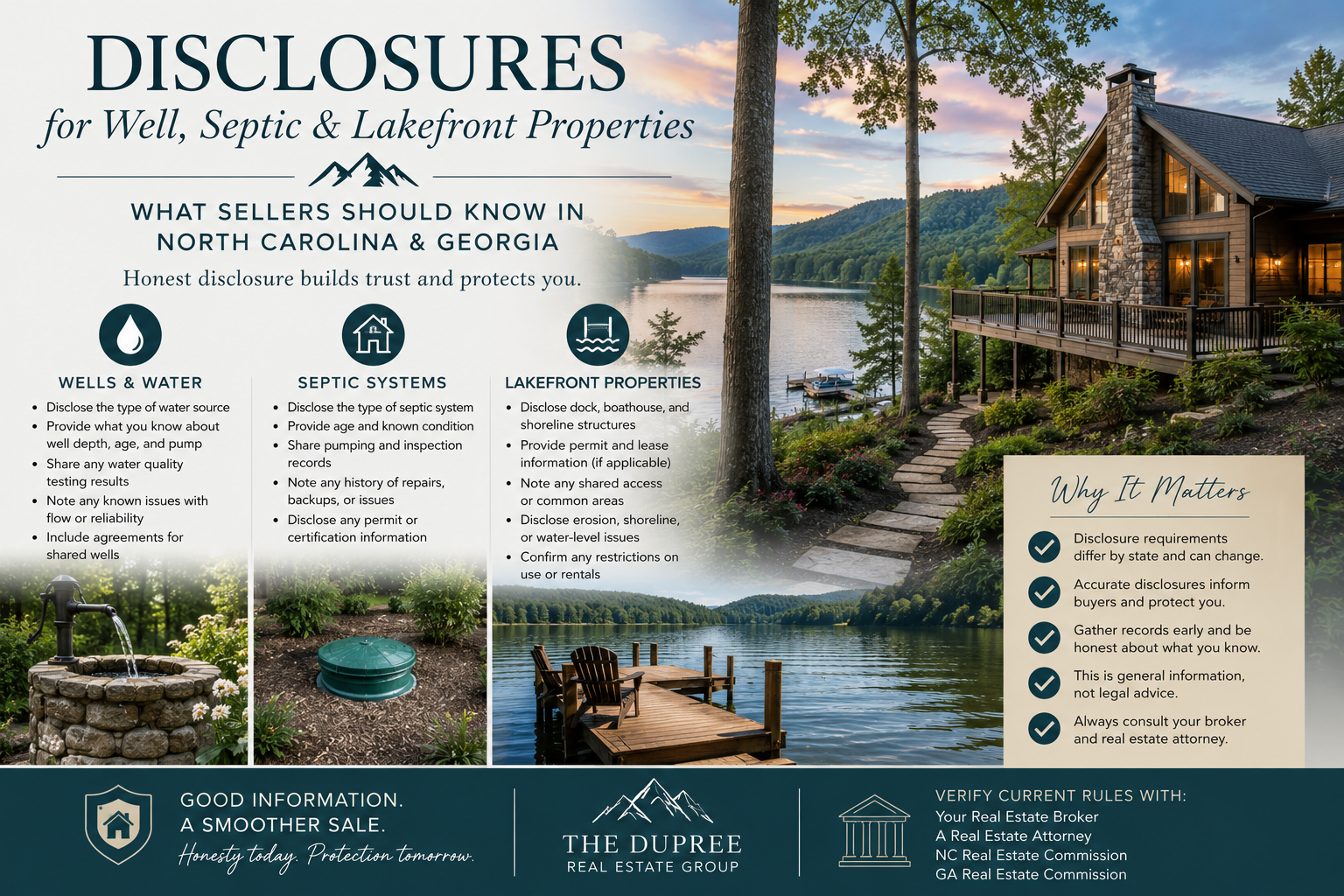
When you sell a rural mountain home, the disclosures matter more than many sellers expect — because the very features that make these properties special (a private well, a septic system, a dock on a reservoir) are also the ones buyers worry about most. Seller disclosures for well, septic, and lakefront homes in North Carolina and Georgia are about giving buyers an honest, accurate account of what you know, which both meets your obligations and protects you from trouble down the road. This is an overview, not legal advice: disclosure rules differ by state and change over time, so confirm the current requirements with your broker and a real estate attorney. Here's what to understand. Handled well, disclosures are not something to dread but a straightforward, protective part of a clean sale — a way of putting the facts on the table so the transaction holds up long after closing.
Key Takeaways
- Disclosure rules differ between North Carolina and Georgia and can change — always confirm the current ones.
- Rural homes raise specific questions about wells, septic systems, and water that city homes don't.
- Lakefront properties add disclosures around docks, shoreline structures, and permit status.
- Accurate, honest disclosure protects the seller as much as it informs the buyer.
- This is general information, not legal advice; consult your broker and a real estate attorney.
Why disclosures matter — for you
It's easy to think of disclosures as a hurdle that protects the buyer, but they protect the seller just as much. An accurate, complete account of what you know about the property's condition and systems is your best defense against a dispute or a claim after closing — it's hard for a buyer to argue they were misled about something you clearly and honestly disclosed. The risk runs the other way: failing to disclose a known problem, or misstating something, can expose a seller to real liability long after the sale. The guiding principle is straightforward: disclose what you actually know, accurately, and don't guess or paper over issues. If you're unsure whether something rises to the level of a disclosure, that's exactly the kind of question to put to your broker and a real estate attorney. In a region of wells, septic systems, and reservoir docks, getting disclosures right isn't just a formality — it's how a sale stays clean and final.
Wells and water
For a home on a private well, buyers — especially those coming from a city water system — will have questions, and your disclosures and records help answer them honestly:
- The water source — whether the home is on a private well, a shared well, a community system, or municipal water.
- Well details — what you know about the well's depth, age, and the pump, plus any history of problems.
- Water quality and quantity — any water-quality testing results and any known issues with flow or reliability.
- Shared arrangements — if a well is shared, any agreements governing its use and maintenance.
You're not expected to be an expert — you're expected to share what you actually know and any records you have. Gathering those documents in advance makes honest disclosure simple.
Septic systems
Septic is one of the most common areas of buyer concern on rural mountain property, so accurate disclosure here is especially valuable. Buyers will want to understand the type of system, its age and condition, and its service history — when the tank was last pumped and inspected, what you know about the drain field, and whether there have been any backups, repairs, or capacity issues. If you have permits, inspection reports, or pumping records, having them organized supports a clean disclosure and reassures buyers. As with wells, the standard is honesty about what you know, not a guarantee of perfection; an unexplained issue you failed to mention is far more damaging than a known one you disclosed plainly. Septic questions can also intersect with how many bedrooms a system is permitted for, which matters to buyers, so it's worth being precise. When in doubt about what must be disclosed or how to phrase it, your broker and attorney are the right guides.
Lakefront, docks, and shoreline structures
Lakefront property adds a layer of disclosure that inland homes don't have, centered on the water's edge. Because the region's lakes are managed by the TVA or a private hydropower licensee rather than the homeowner, docks and shoreline structures require permits and aren't automatic with ownership — and that makes their status a key disclosure point. Be prepared to share accurately what you know about any dock or shoreline structure: whether it's permitted, the permit's status and whether it transfers to a new owner, and whether anything has been built or modified without authorization. Misrepresenting a dock as permitted when it isn't, or implying dock rights that don't exist, is exactly the kind of error that causes disputes after closing. The honest, protective approach is to disclose the actual permit status and let the documentation speak — and to confirm the current shoreline rules with the managing authority so what you represent is accurate. Here again, your broker and attorney can help you handle it correctly.
Disclosure essentials at a glance
| Feature | Disclose what you know about |
|---|---|
| Water | Source, well depth/age, quality results, flow, shared agreements |
| Septic | Type, age, service history, permits, any issues |
| Lakefront | Dock permit status, transferability, unauthorized structures |
| General | Known defects, repairs, and material conditions |
North Carolina and Georgia each have their own disclosure forms and rules, so the specifics of what and how you disclose depend on the state and the situation — confirm with your broker.
Gathering your records before you list
A practical step that makes disclosures far easier is to gather your property records before you list, rather than scrambling for them mid-transaction. For the well, that means any drilling or pump records, water-test results, and notes on maintenance or repairs. For the septic system, it means permits, the most recent pumping and inspection records, and any documentation of the system's design or capacity. For a lakefront property, it means the dock permit and any correspondence with the managing authority about the shoreline. Having these organized does double duty: it supports an honest, complete disclosure, and it reassures buyers, who tend to trust a seller who can produce documentation over one who can only offer recollections. It can also speed the transaction, since buyers and their inspectors and lenders will often ask for exactly these items. If you're missing records, your broker can help you figure out how to obtain or reconstruct them, and a real estate attorney can advise on anything unclear. A little organization up front turns disclosure from a source of anxiety into a straightforward, protective part of the sale.
Approaching disclosures this way — organized, honest, and guided by your broker and attorney — changes the whole tenor of a sale. Instead of a nervous box-checking exercise, it becomes a demonstration of good faith that builds trust with buyers and smooths the path to closing. Buyers who feel they're getting a straight, well-documented account of a property are more comfortable moving forward and less likely to raise issues late in the process. In a region where wells, septic systems, and reservoir docks are the norm rather than the exception, a seller who handles these disclosures thoughtfully stands out, and that diligence tends to pay off in a cleaner, more confident transaction from contract to close.
Frequently Asked Questions
What do I have to disclose when selling a rural home?
Disclosure rules vary by state, but generally you should accurately disclose what you know about the property's condition and systems, including the water source, septic, and any known defects. Confirm the exact requirements with your broker and attorney.
Are well and septic disclosures different from city homes?
Yes. Rural homes on a private well and septic raise specific questions — water source and quality, well details, septic type and service history — that a home on city water and sewer doesn't. Records help you disclose these honestly.
What should I disclose about a dock on a lakefront home?
Disclose accurately what you know about the dock's permit status, whether it transfers, and any unauthorized structures. Because TVA or a licensee controls the shoreline, dock rights aren't automatic and misrepresenting them invites disputes.
Why does accurate disclosure protect the seller?
Honest, complete disclosure is a seller's best defense against a post-closing dispute, while failing to disclose a known issue can create real liability. Disclosing what you know plainly keeps the sale clean and final.
Is this legal advice?
No. This is general information only. Disclosure rules differ between North Carolina and Georgia and change over time, so confirm the current requirements with your real estate broker and a qualified real estate attorney.
Selling with confidence and care
Getting disclosures right is part of a clean, low-stress sale — and it's easier with a team that knows mountain and lakefront properties. The DuPree Real Estate Group can help you organize records and work with your attorney to handle disclosures correctly. When you're ready, reach out to Bonnie DuPree to talk through your property, or explore the local market to see how homes here are presented.
The DuPree Real Estate Group is pledged to the letter and spirit of U.S. policy for the achievement of equal housing opportunity. Bonnie DuPree, REALTOR® · RE/MAX Town & Country · Each Office Independently Owned and Operated.
Check out this article next