
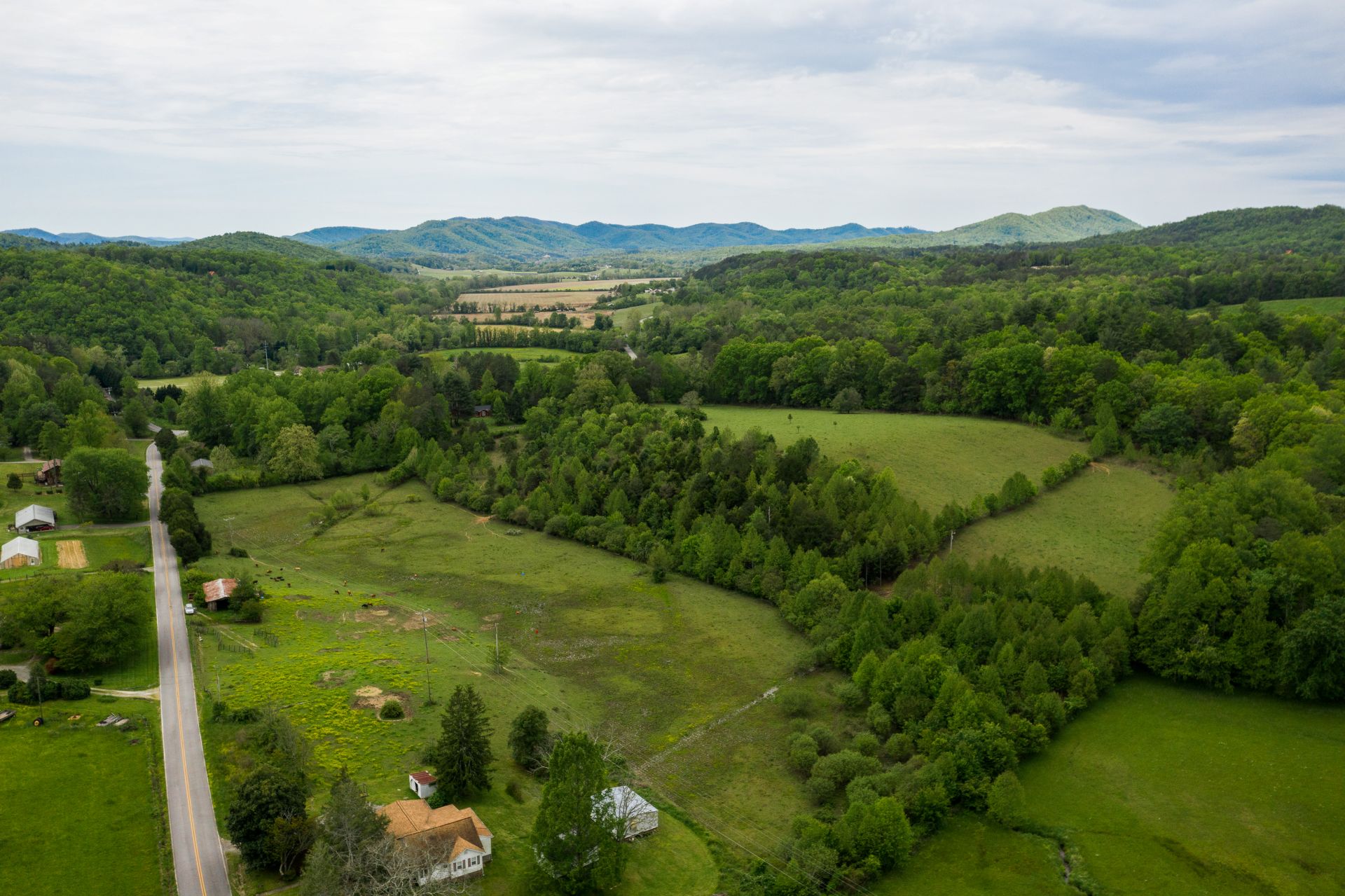
Buying a piece of mountain land to build your own home is one of the most rewarding paths to mountain living — and one that rewards careful homework. Mountain land for sale near Murphy, NC ranges from gentle wooded lots to dramatic ridge-top parcels with long-range views, but a beautiful piece of ground is only as good as what you can actually build on it. The questions that matter most are practical: will the soil support a septic system, is the slope buildable without runaway site costs, can you legally and reliably reach the property, and can you get utilities to it? Doing this due diligence before you buy is how a gorgeous view becomes a home rather than a headache.
Key Takeaways
- A buildable parcel needs soil that supports a septic system — perc and soil testing comes first.
- Slope drives site-work cost; a feasible building site matters as much as the view.
- Legal, usable access — public road frontage or a recorded easement — is essential.
- Utilities (power, water, internet) vary by location; confirm what can reach the site.
- Verify zoning, setbacks, and any regulations with local authorities — don't assume.
Start with septic and soil
On most mountain land, the single most important question is whether the parcel can support a septic system, because nearly all rural lots rely on septic rather than municipal sewer. A soil evaluation, or perc test, assesses whether and where the ground will accommodate a septic system and what type, and it can make or break a building plan: a stunning lot that won't perc may not be buildable in the way you hope. If a seller has already had soil work done, that documentation is gold; if not, making your purchase contingent on a satisfactory soil evaluation is a common and prudent step. The results also shape where on the parcel you can build and how many bedrooms the system will support, which affects the home you can design. Because septic regulations and permitting are handled at the county and state level and can change, confirm the current requirements with the relevant local environmental health office rather than assuming. Getting the septic question answered early saves you from falling for a parcel that can't become the home you want.
Slope and the buildable site
Mountain land is, by definition, often steep, and slope has a direct effect on both feasibility and cost. A relatively level or gently sloped building site can be developed at reasonable cost, while a very steep parcel may require extensive grading, retaining walls, deep foundations, or engineered solutions that add significantly to the budget — sometimes more than buyers expect. The goal is to identify a genuinely feasible building envelope: a spot where the home can sit, with room for the driveway, septic, and any outbuildings. A steep lot isn't necessarily a dealbreaker — some of the most spectacular mountain homes are built into dramatic grades — but it's essential to understand the site work involved and to budget for it realistically. Walking the land with a knowledgeable eye, and ideally consulting a builder or site professional about a specific parcel before purchase, helps you separate a buildable lot with a manageable site from one whose beautiful view comes with a punishing construction bill. The slope shapes everything that follows.
Access and road maintenance
How you reach the property — and who maintains the route — is a make-or-break factor that's easy to underestimate. The key questions:
- Legal access — does the parcel have public road frontage, or a recorded, deeded easement that legally allows you to build a driveway and bring in utilities? Avoid landlocked or unclear access.
- Road type and maintenance — is the access a paved, county-maintained road, or a private or forest road, and who is responsible for maintaining it (and sharing the cost)?
- Winter and weather — how does the access hold up in winter at elevation, with ice, snow, or washouts on steep grades?
- Driveway feasibility — can a usable driveway actually be built to the home site given the slope and distance?
Clear, reliable, legally documented access is one of the most valuable features a piece of mountain land can have — and ambiguity around it is one of the most common and costly problems.
Utilities and the view
Once septic, slope, and access check out, the remaining practical questions center on utilities and the features that drew you to the land. Confirm whether power can be brought to the building site and at what rough cost, since long runs from the nearest line can be expensive. Water usually means a private well, so it's worth understanding well prospects in the area, and internet availability varies widely — important to verify if you plan to work or stream from the home. Beyond utilities, consider the things that make the parcel special: the view, the privacy, the trees, any creek or spring. If a long-range view is the draw, think about whether it's protected — could a neighbor's future building or tree growth obscure it — and whether any view or other easements are recorded. It's also wise to verify zoning, any subdivision or HOA covenants, building setbacks, and any restrictions with the local authorities, since these shape what and where you can build. None of this is meant to discourage; it's the homework that turns raw land into a confident foundation for the home you're picturing.
A land-buyer's due-diligence checklist
| Check | Why it matters |
|---|---|
| Soil / perc test | Proves the lot can support a septic system |
| Buildable slope | Determines site-work cost and a feasible home site |
| Legal access | Public frontage or recorded easement; not landlocked |
| Road maintenance | Who maintains the route, and winter reliability |
| Utilities | Power reach, well prospects, internet availability |
| Zoning & restrictions | Setbacks, covenants, and what you can build |
Budgeting for the full picture
One of the most important habits for a land buyer is to budget for the whole picture, not just the purchase price. The cost of the lot is only the beginning; the path from raw parcel to finished home includes site work, the driveway, the well and septic, bringing in utilities, and the build itself — and on mountain land, several of those can run higher than buyers expect. A steep site may need significant grading or engineered foundations; a long driveway or a distant power connection adds cost; a well must be drilled and a septic system installed and permitted. None of this is a reason to avoid building, which remains one of the most satisfying ways to get exactly the mountain home you want, but it argues strongly for doing the homework and lining up realistic numbers before you commit. Talking with a local builder about a specific parcel, getting rough estimates for the major cost items, and confirming the regulatory requirements all help you buy with eyes open. A parcel that pencils out with the full cost picture in view is a sound foundation; one bought on the strength of the view alone can lead to surprises. Going in informed is how land buyers end up genuinely happy with what they build.
Frequently Asked Questions
What's the first thing to check on mountain land?
Usually the soil and septic situation. A perc or soil evaluation shows whether and where the parcel can support a septic system, which determines whether you can build the home you want. Confirm requirements with the local environmental health office.
Does a steep lot cost more to build on?
Often, yes. Steep parcels may need extensive grading, retaining walls, or engineered foundations, adding significantly to site costs. A steep lot can still be ideal, but it's essential to understand and budget for the site work before buying.
Why does access matter so much?
You need legal, usable access — public road frontage or a recorded easement — to build a driveway and bring in utilities, plus a route that's reliable in winter. Landlocked or unclear access makes a parcel hard to build on, finance, and resell.
Can I get utilities to any mountain lot?
Not always easily. Power can be costly to run over long distances, water usually means a private well, and internet availability varies by location. Confirm what can reach a specific site, and at what rough cost, before you buy.
Should I verify zoning and restrictions?
Yes. Verify zoning, building setbacks, and any subdivision or HOA covenants with local authorities, since they shape what and where you can build. Don't assume — rules vary by location and can change, so confirm directly.
Build your mountain home with confidence
The right due diligence turns a beautiful parcel into a sound foundation for your home. The DuPree Real Estate Group works with land and home sites across the region and can help you ask the right questions of the right people. When you're ready, you can browse current land listings, read our guide to utilities and connectivity in the area, or reach out to Bonnie DuPree to talk through a specific parcel.
The DuPree Real Estate Group is pledged to the letter and spirit of U.S. policy for the achievement of equal housing opportunity. Bonnie DuPree, REALTOR® · RE/MAX Town & Country · Each Office Independently Owned and Operated.
Check out this article next