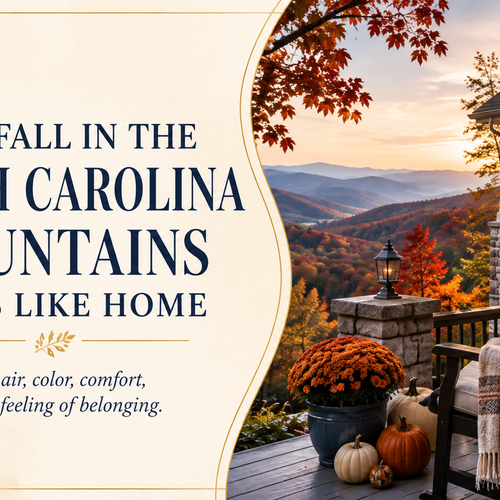

There is a week in late August or early September when the mountains begin to change. It is not the sudden, dramatic turn most people picture when they think of fall — it is subtler, quieter, and easy to miss if you are not paying attention. But once you have lived through a few of these weeks, you learn to sense them coming. The light shifts first. Then the mornings turn cool enough for a jacket. Then, one afternoon, you notice a single tree at the crest of a ridge glowing red against the still-green forest around it, and you realize fall has arrived. This is a guide to that first week — the sensory signs of autumn in the North Carolina mountains, when to look for them, and why they matter. Because before the leaf-season crowds and the peak-color drives, there is a smaller, more private season that belongs to the residents. It is one of the best times of the year to be here.
Key Takeaways
- Fall in the NC mountains begins in stages — cooler mornings and changing light arrive before the color.
- The highest ridges show the first color, sometimes as early as the last week of August.
- Longer, slanted light and quieter tourist season mark the transition weeks.
- Farmers markets and downtowns shift subtly from summer to fall in the same window.
- These transition weeks are quieter, cooler, and often the best time to plan a mountain visit.
The morning that gives it away
The first sign is always a morning. You step out onto the porch for coffee and something has changed. The air has an edge to it — not cold, not quite crisp, but noticeably cooler than the mornings of a week ago. In the valleys around Murphy, Andrews, and Hayesville, temperatures in late August and early September can dip into the mid-fifties overnight, and the higher elevations run cooler still. It is the kind of morning that asks for a second layer, or at least a warm mug held close. Fog often lingers in the coves and along the rivers, and the smell of the woods changes as leaves begin to release the moisture they have held all summer. For anyone who has spent a decade or two in these mountains, that first cool morning has an almost ceremonial quality — it is the moment you know the long summer is finally passing. If you are new to the area, you will learn to look for it. If you are visiting, it is one of the small mountain pleasures that rarely make the guidebooks but stay with you the longest.
The light changes before the leaves do
Long before the trees turn, the light does. By early September, the sun sits noticeably lower in the sky than it did in July, and it arrives at your porch or your kitchen window at a different angle. Shadows lengthen. The golden-hour period — that soft, warm window just after sunrise and just before sunset — stretches longer and more generously. Photographers who work in the mountains know this window intimately and plan their fall shoots around it. Even without a camera in hand, you begin to notice how the ridgelines catch the late-afternoon light, how the leaves of certain trees seem to glow from within, and how ordinary drives suddenly ask you to slow down and look. This is the light that turns a familiar view into something painterly, and it is one of the truest, earliest signs that fall is here — often two or three weeks before the color arrives to prove it.
The first color at the highest ridges
Fall color moves down the mountains in stages. The highest elevations — the ridges above 4,500 feet, the summit of Brasstown Bald, the high stretches of the Cherohala Skyway — often show their first touches of red and orange in the last week of August or the first week of September. It is not the wall-to-wall color that arrives in October, but individual sourwood, dogwood, and black gum trees that turn early, sometimes glowing red against the still-green forest around them. If you spend any time driving the high country in late summer, you will begin to spot them. They are easy to miss and easy to dismiss — one red tree among thousands of green ones — but they are the first true evidence that the season is changing. In the coves and lower valleys, everything still looks like summer. The mountains give you fall in pieces, and the highest peaks always go first.
The mountains empty out, briefly
Something else happens in this transition week. The mountains, for a moment, empty out. The summer visitors have gone home. The leaf-season crowds have not yet arrived. Restaurants have breathing room again. Trailhead parking lots have spaces. The lakes settle into their quiet late-season rhythm. It is a brief but real window — usually a week or two — when the region belongs mostly to the people who live here. Locals know this stretch and often plan around it, taking longer weekend drives, unhurried meals downtown, and afternoons on the water before the fall pace picks up. For visitors who happen upon it, the effect is memorable. You get the mountains at their most unhurried, and you see something the peak-season crowds never quite catch: what daily life here actually looks like when the region is not performing for anyone.
Signs of fall around town
The transition shows up in the small towns too, if you know where to look:
- The Murphy Farmers Market tables begin their shift from summer squash and tomatoes to early apples, winter squash, mums, and the first sorghum molasses of the season.
- Downtown storefronts begin quiet fall touches — a pumpkin here, a wreath there, mums by the doors.
- The John C. Campbell Folk School in Brasstown starts its busy fall class calendar, and craft studios across the region gear up for the season ahead.
- The regional wineries in North Georgia — Wolf Mountain, Yonah Mountain, and others — begin their harvest work and shift toward fall tastings.
Individually, these are small things. Taken together, they form a quiet, unhurried transition that unfolds across the whole region in the space of a couple of weeks. Watch for them, and you will start to notice the season turning around you.
A quick look at the transition weeks
| What to notice | Where to find it |
|---|---|
| Cool morning air, valley fog | Your porch, any low-lying area |
| Long, slanted golden light | Any west-facing ridgeline in the afternoon |
| First red trees against green | Highest elevations — Brasstown Bald, Cherohala Skyway |
| Empty trails and quiet lakes | Nantahala National Forest, TVA lakes |
| Fall bounty at the market | Murphy, Hayesville, Blairsville markets |
Why this window matters
The transition week is worth understanding for a practical reason too. For anyone considering a mountain visit — or thinking about what it might be like to spend more time here — the first week of fall is one of the most rewarding windows on the calendar. It offers cool, comfortable weather. It offers a preview of the color to come, without the traffic that will accompany it a few weeks from now. It offers a look at the region at its most authentic, when the towns and trails are running at their normal, unhurried pace rather than their peak-season pace. And it offers a chance to see the mountains as they actually live: cool mornings, golden afternoons, quiet evenings, a slow shift toward something even more beautiful. Many of the people who eventually move to these mountains say they first fell in love with the region during this exact window — not during a peak leaf-season weekend, but during a quieter, more ordinary visit when the season was just starting to turn. There is a reason for that. The transition weeks show you what daily life is like, and that is the question that matters most when you are imagining a place as home.
Making the most of a transition-week visit
A few tips if you find yourself here during the changeover. Drive up to the high country early — the Cherohala Skyway, Brasstown Bald, and any road that climbs above 4,500 feet — to look for the first color. Plan a Saturday morning at the Murphy Farmers Market and a Sunday drive through Blairsville or Blue Ridge, both of which are working the same seasonal shift. Take a hike in the Nantahala National Forest in the early morning, when the fog is still burning off and the woods feel especially quiet. Have lunch downtown, unhurried, and watch how the light changes through the afternoon. If the lakes are still calling — the water is warm even as the air cools — spend a morning on Hiwassee, Chatuge, or Nottely. Then sit on a porch at sunset. That is the whole transition, in one perfect day.
Frequently Asked Questions
When does fall really start in the NC mountains?
Fall arrives in stages by elevation. The high ridges above 4,500 feet often show their first cool mornings and earliest color in the last week of August or first week of September, while the valleys and lakeshores keep summer's feel through most of September and turn later in October and November.
Where can I see the first fall color in the region?
The highest elevations show color first. Brasstown Bald, the Cherohala Skyway, and the loftiest ridges of the Nantahala National Forest are the best places to spot the earliest reds and oranges. Sourwood, dogwood, and black gum trees are among the first to turn.
Is the transition week a good time to visit?
Many longtime residents consider it one of the best windows of the year. The summer crowds have eased, the leaf-season crowds have not yet arrived, and the mountains show themselves at their most authentic pace. Weather is cool but comfortable, and lake temperatures often stay warm well into September.
What is open at the farmers markets in early fall?
The Murphy Farmers Market runs Saturday mornings, 9 a.m. to 1 p.m., at the L&N Depot in downtown Murphy through the last Saturday in October. Late summer and early fall bring a shift toward apples, winter squash, mums, honey, and baked goods, alongside the last of the summer produce. Confirm current dates and hours.
How is fall in the NC mountains different from other places?
The mountain fall is longer, cooler, and more colorful than fall in the lowlands. Because color moves down by elevation, the season can stretch six or more weeks in a good year. Cool mornings and mild afternoons make outdoor life comfortable, and small-town culture leans into the season with harvest, crafts, and festivals.
Come see the season turn
The transition weeks are one of the best-kept secrets of mountain life. If any of this sounds like the season you have been missing, you can browse current listings around Murphy, read about the lakes that span the state line, or reach out to Bonnie DuPree to plan a visit. Come for a weekend, and see what keeps people here for a lifetime.
The DuPree Real Estate Group is pledged to the letter and spirit of U.S. policy for the achievement of equal housing opportunity. Bonnie DuPree, REALTOR® · RE/MAX Town & Country · Each Office Independently Owned and Operated.
Check out this article next