

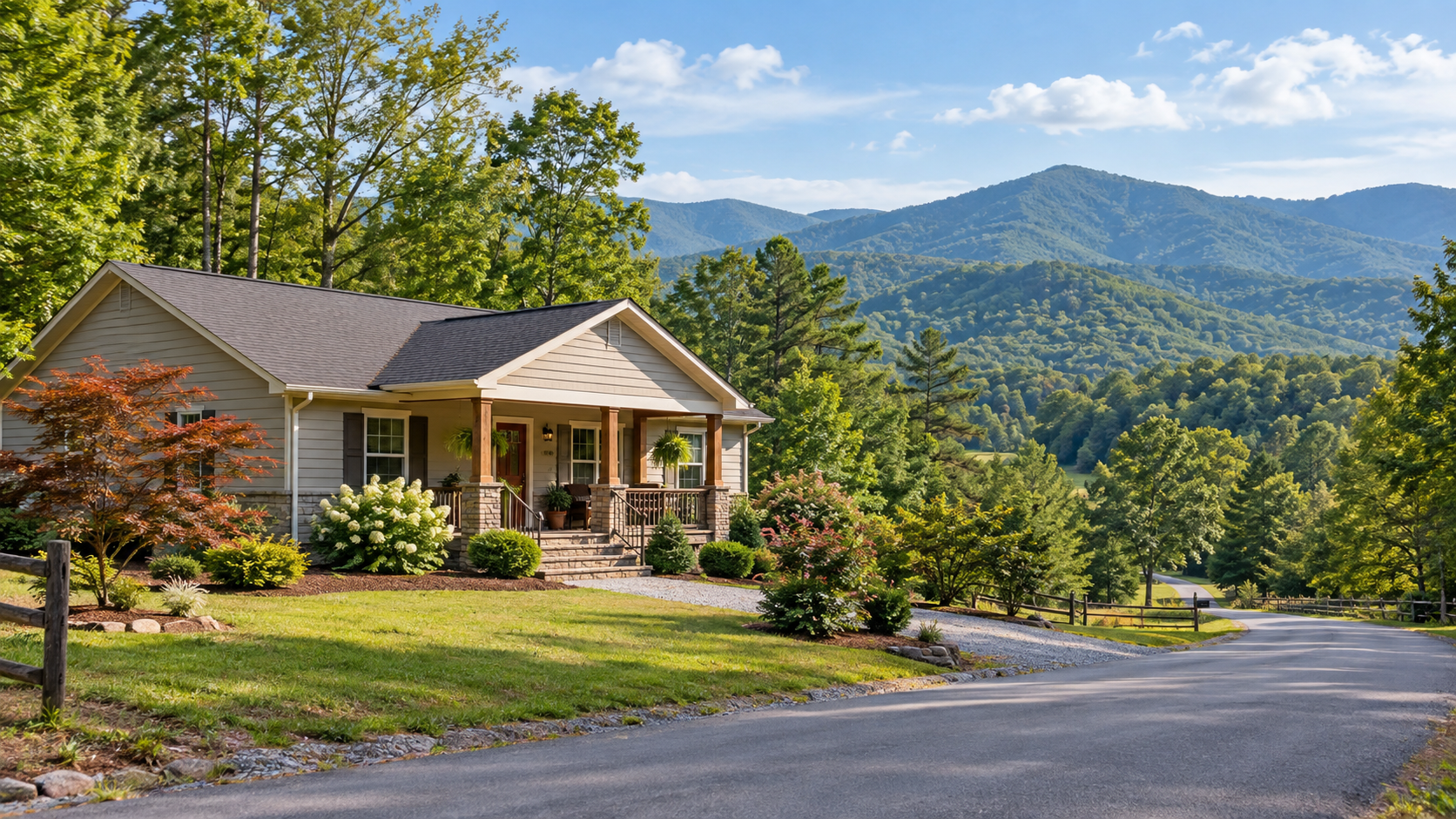
On a clear October morning, with the ridges around Hiwassee Lake turning gold, it is easy to see why so many owners love sharing their mountain homes with guests. Short-term rentals can be a lovely fit for a second home in Murphy, NC, and whether a specific home works for one depends on a handful of items you can check before you buy: where the home sits (Town of Murphy or unincorporated Cherokee County), what the deed and any HOA documents say, and how North Carolina and Cherokee County taxes apply. Here are the short term rental rules Murphy NC buyers should look at, and where to look.
Key Takeaways
- Homes inside Murphy's town limits fall under the Town of Murphy Zoning Code (Chapter 153), so a quick call to the Town about the home's zoning district is a smart first step.
- For homes in unincorporated Cherokee County, recorded covenants and HOA rules are often where rental terms are spelled out; confirm any county requirements with Cherokee County.
- NCDOR taxes rentals of residences and cottages at the 4.75% state rate plus local sales tax; Cherokee County's combined rate is 7%, per NCDOR's rate table effective July 1, 2026.
- Cherokee County's occupancy tax registration form lists a 4% occupancy tax, reported monthly to the Cherokee County Finance Department.
- North Carolina's Vacation Rental Act covers rentals for vacation, leisure or recreation of fewer than 90 days and calls for a written rental agreement.
Are short-term rentals allowed in Murphy, NC?
I'm Bonnie DuPree, a REALTOR® with RE/MAX Town & Country and a Resort & Second-Home Property Specialist (RSPS), and I've helped people buy homes in these mountains since 2007. The most useful answer I can give is this: the rules follow the address. Murphy is the county seat of Cherokee County, but much of the county's cabin and lake country sits outside the town limits, and those two settings are handled differently.
Inside the Town of Murphy. The Town's Code of Ordinances (current through an ordinance passed May 11, 2026) includes a Zoning Code, Chapter 153, with districts such as R-1 Medium Density Residential, R-2 High Density Residential, General Business and Highway Business. I did not find a section that speaks to short-term rentals by name, so check with the Town of Murphy about how the home's zoning district treats rental use before you commit.
In unincorporated Cherokee County. The ordinances Cherokee County lists on its website (reviewed September 2026) include a comprehensive plan and several ordinances, and none of them is a zoning ordinance. Rental terms in the county often live in a community's recorded covenants and HOA rules instead, and I always suggest confirming with the county for the specific parcel. Pairing this step with a look at the cost of living in Murphy, NC gives you a clear, complete picture of owning here.
What are the short term rental rules Murphy NC buyers should check?
I like to think of this as a friendly checklist that fits neatly inside North Carolina's due diligence period. Each line has a clear place to find the answer:
| What to check | Where to check it | Why it matters |
|---|---|---|
| Town limits or county | Cherokee County tax records; the Town of Murphy | Tells you which set of local rules applies |
| Zoning district (in town) | Town of Murphy, Zoning Code Chapter 153 | Confirms how rental use is treated at that address |
| Restrictive covenants | Cherokee County Register of Deeds; your closing attorney | Recorded covenants can set rental terms, such as a minimum stay |
| HOA or POA rules | The association's bylaws, rules and recent minutes | Shows guest, parking, amenity and registration policies |
| State and local sales tax | NC Department of Revenue | Rentals of residences and cottages are taxable in NC |
| Occupancy tax | Cherokee County Finance Department | Registration and monthly reporting for the county's room tax |
| Septic permit | County health department records | Septic systems are permitted for a set number of bedrooms |
| Insurance | Your insurance agent | Confirms the policy fits short-term rental use |
A friendly note: this post shares what I check and where the official sources point. It is not legal or tax advice, so lean on a North Carolina real estate attorney and a tax professional for your own situation.
What taxes apply to a vacation rental in Cherokee County?
Two layers of tax usually apply, and both are straightforward once you're registered.
- Sales tax. NCDOR's page on Rentals of Accommodations defines an accommodation to include a residence or a cottage, with gross receipts subject to the general state and applicable local and transit sales tax, plus any local occupancy tax. NCDOR's current rate table lists the 4.75% state rate, and Cherokee County's combined rate is 7% (4.75% state plus 2.25% local), per NCDOR's rate table effective July 1, 2026.
- Occupancy tax. Cherokee County's occupancy tax registration form lists a 4% occupancy tax per room night, with registration and monthly reports going to the Cherokee County Finance Department at 75 Peachtree Street in Murphy. The North Carolina Restaurant & Lodging Association's 2024 profile also lists Cherokee County at 4%, directed to the county's Tourism Development Authority. Confirm the current rate and filing schedule with the county before your first booking.
- Longer stays. Under G.S. 105-164.4F(e)(2), cited in an NCDOR ruling, an accommodation supplied to the same person for 90 or more continuous days is excluded from the accommodation sales tax.
Booking platforms may collect and remit some of these taxes for you. Ask your platform exactly which North Carolina and Cherokee County taxes it handles, and cover the rest yourself.
What does the North Carolina Vacation Rental Act ask of owners?
Chapter 42A of the North Carolina General Statutes, the Vacation Rental Act, defines a vacation rental as the rental of residential property for vacation, leisure or recreation purposes for fewer than 90 days by a person who has a permanent residence to which they intend to return. Its main points for owners are clear and practical:
- A written agreement. The landlord or real estate broker and the guest execute a vacation rental agreement for every rental the Act covers.
- Advance payments in trust. Advance payments go into a trust account no later than three banking days after receipt.
- Security deposits. Funds not identified in the agreement as taxes, fees or rent are treated as a security deposit, with an accounting or refund within 45 days after the stay.
- A fit, habitable home. The landlord keeps the home fit and habitable, maintains electrical, plumbing and heating systems, and provides operable smoke and carbon monoxide alarms.
The Act also lists exemptions, such as rentals for business travel. If you plan to hand day-to-day guest care to a management company, ask how they handle these agreements and trust funds.
How do HOA rules, covenants and insurance fit in?
This is where I spend the most time with second-home buyers, because these documents are specific to each community. Around Murphy you'll find everything from wooded cabin communities off US-64 to lake neighborhoods near Hiwassee Lake and homes on open acreage toward Brasstown and Andrews. Some communities welcome short stays, some set a minimum rental term, and some have guest parking or amenity rules. Reading them early lets you choose with confidence.
- Covenants and HOA documents: I like to request them as soon as we're under contract so there is plenty of time to read them.
- Insurance: many homeowners policies are written for personal use, so ask your agent whether short-term rental use calls for a different policy or an endorsement.
- The home itself: bedroom count, septic permit, parking and driveway access all shape how comfortably a home hosts guests year-round.
Style matters too. If you're weighing a brand-new cabin against a lived-in one, my post on new construction vs. resale cabins in the mountains walks through what each offers.
How can you plan for guests year-round in a mountain home?
Sharing a mountain home works beautifully with a simple plan for the seasons. Spring and summer bring lake days on Hiwassee Lake and Lake Chatuge, fall brings color on the ridges, and winter brings cozy weekends by the fire, so a home here can welcome guests in every season.
Before your first guests arrive, line up a local cleaner, a caretaker who can check the home between stays, and a heating and plumbing contact. My second-home fall prep guide covers getting an absentee home ready for cooler months.
When winter comes, the steps for a home that sits empty between bookings are a little different from a full shutdown. My checklist on how to winterize a second home in Murphy helps you choose the right approach for your calendar.
My team, The DuPree Real Estate Group, helps you gather these answers during your due diligence period, so the home you choose fits the way you want to use it.
Frequently Asked Questions
Are short-term rentals allowed in Murphy, NC?
It depends on where the home sits. Inside the town limits, the Town of Murphy Zoning Code (Chapter 153) applies, so check with the Town about the home's zoning district. In unincorporated Cherokee County, recorded covenants and HOA rules often set rental terms; confirm any county requirements with Cherokee County.
What is the occupancy tax in Cherokee County, NC?
Cherokee County's occupancy tax registration form lists a 4% occupancy tax per room night, reported monthly to the Cherokee County Finance Department in Murphy. Confirm the current rate and filing schedule with the county.
Do I have to collect sales tax on a vacation rental in North Carolina?
Yes. The NC Department of Revenue taxes rentals of residences and cottages at the 4.75% state rate plus applicable local rates. Cherokee County's combined rate is 7% as of July 1, 2026. Some booking platforms collect certain taxes for hosts, so confirm what yours handles.
What is the North Carolina Vacation Rental Act?
It is Chapter 42A of the North Carolina General Statutes. It covers rentals of residential property for vacation, leisure or recreation of fewer than 90 days and calls for a written rental agreement, trust accounts for advance payments and a fit, habitable home.
Can an HOA limit short-term rentals near Murphy, NC?
Recorded covenants and HOA rules can set rental terms, such as a minimum stay or guest parking rules. I suggest reading the covenants, bylaws and rules early in your due diligence period, ideally with a North Carolina real estate attorney.
Your Local Expert
I'm Bonnie DuPree, REALTOR®, founder of The DuPree Real Estate Group at RE/MAX Town & Country. Based in Murphy, NC — the county seat of Cherokee County — I've guided buyers and sellers through mountain and lake homes since 2007. As a Resort & Second-Home Property Specialist (RSPS), I help owners find a getaway that fits how they want to use it, from Murphy and Andrews to Hayesville, Robbinsville, Blairsville, Blue Ridge and Hiawassee. My team's "One Thing" model gives each specialist one part of your move.
Find a mountain home you'll love to share
Sharing a cabin or lake home with guests is one of the happiest ways to enjoy owning in Murphy, and a little homework up front makes it easy. When you're ready, browse current homes for sale around Murphy and note the ones that catch your eye.
I'd be glad to help you check the details on any of them. Reach out to me directly, or call me at (828) 361-1027, and we'll start with the address.
The DuPree Real Estate Group is pledged to the letter and spirit of U.S. policy for the achievement of equal housing opportunity. Bonnie DuPree, REALTOR® · RE/MAX Town & Country · Each Office Independently Owned and Operated.
Check out this article next