
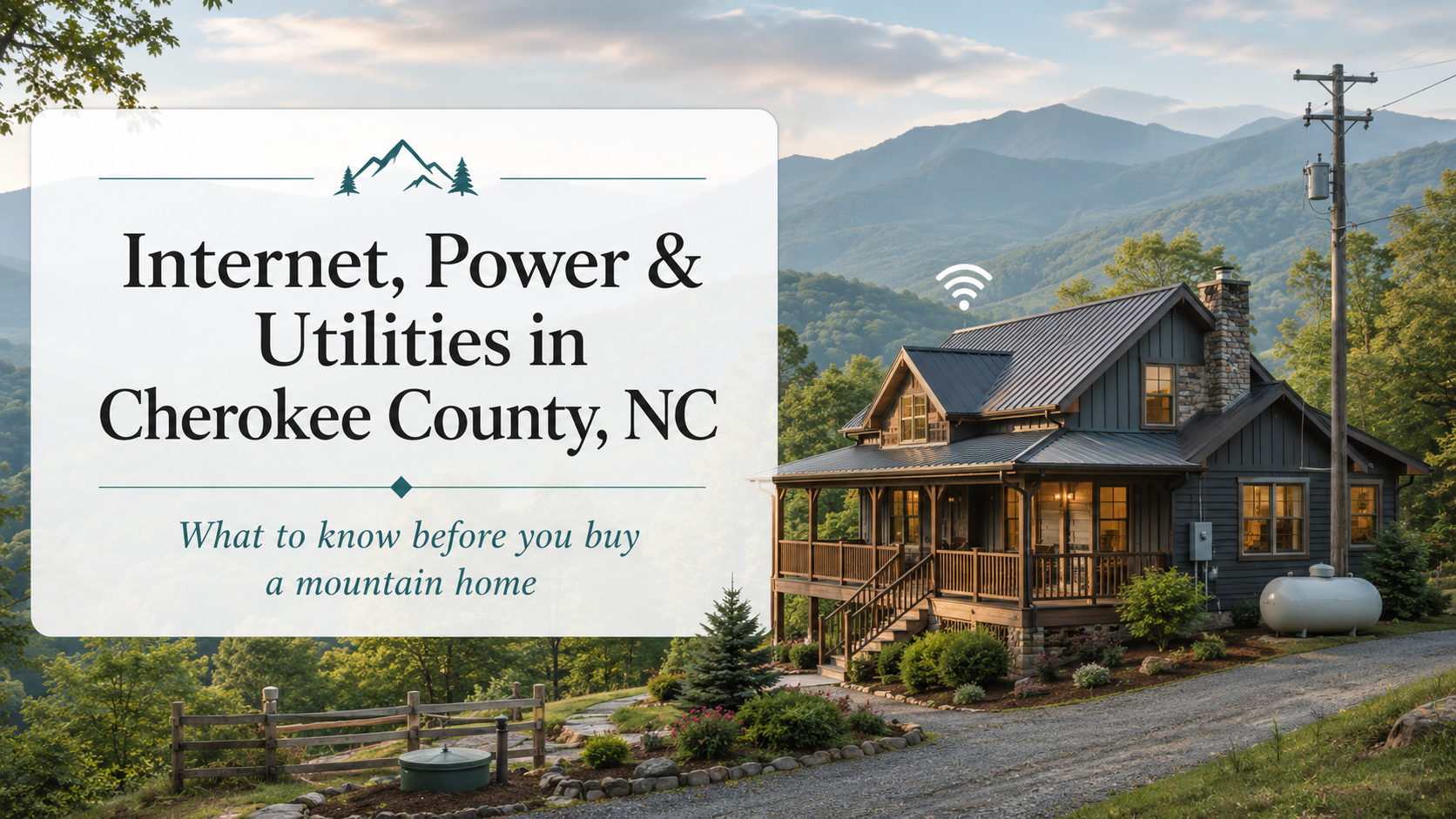
For anyone moving to the mountains — especially with remote work in the picture — the practical questions about utilities matter as much as the view. Internet, power, and utilities in Cherokee County, NC vary more from property to property than they do in a city, because homes here range from in-town lots on municipal services to remote cabins on a well, a septic system, and propane. Connectivity has improved a great deal in recent years, but it still pays to check the specifics for any home you're considering. Here's a practical overview of what to expect and what to verify before you buy. The reassuring news is that none of it is mysterious once you know what to ask, and plenty of people work, stream, and live comfortably here year-round; the key is simply matching a specific property's services to the way you intend to use it.
Key Takeaways
- Utilities vary widely by property — in-town homes and remote cabins are very different.
- Internet has improved across the area, but availability and speed differ by address; always verify.
- Electricity comes from utilities and electric co-ops depending on location.
- Many rural homes rely on a private well, a septic system, and propane rather than municipal services.
- Check connectivity, power, water, and heating arrangements for each specific home before buying.
Internet and connectivity
Connectivity is the question most newcomers ask first, and the honest answer is that it depends on the address. In and around the towns — Murphy, Andrews, and the more developed corridors — wired broadband options are increasingly available, and the region has seen meaningful investment in expanding service in recent years. Out on more remote lots, options may shift toward fixed wireless, cellular-based service, or satellite, and speeds can vary with terrain and distance. For remote work, this is the single most important thing to confirm on any property: don't assume, ask. Check what's actually available and connectable at the specific address, what speeds are realistic, and whether a particular provider serves that road. A quick check with current providers and the seller about what's installed and working will tell you far more than a general coverage map. The good news is that working from a mountain home is more feasible now than ever — but verifying it home by home is essential.
Electricity
Electric service in Cherokee County comes from a mix of providers depending on where a property sits, including electric membership cooperatives that serve much of the rural mountain region. Co-ops are member-owned and common across Western North Carolina, and the provider for a given home depends on its location. For buyers, the practical points are simple: confirm who provides power to the property, understand that rural mountain lines can be more exposed to weather-related outages than urban grids, and consider whether a property has — or could use — a backup generator, which many mountain homeowners value during winter storms. It's also worth asking about the age and condition of the home's electrical service and panel, particularly on older cabins. None of this is unusual for the setting; it's simply part of the due diligence that comes with a rural mountain property.
Water, septic, and heating
How a home handles water and heat is one of the clearest dividing lines between in-town and rural properties:
A quick word on costs and seasonality: rural utilities can carry different rhythms than a city bill. Propane is bought by the tankful and prices move with the season, so many homeowners fill up in the warmer months; well water means no water bill but does mean a pump that depends on electricity, which is one more reason backup power is popular; and a septic system needs occasional pumping rather than a monthly sewer charge. None of these are drawbacks so much as a different way of running a household, and most owners settle into the routine quickly. Budgeting for them up front simply makes the transition to mountain living smoother.
- Water — in-town homes often connect to municipal water, while rural properties typically rely on a private well; confirm the source, and for a well, ask about depth, flow, and any water-quality testing.
- Sewer vs. septic — town properties may have municipal sewer, but many homes use a private septic system; ask when it was last pumped and inspected and what's known about the drain field.
- Heating — homes here use a range of systems, with propane, electric heat, heat pumps, and wood or pellet stoves all common; propane is delivered and stored on-site, so factor in tank ownership and supply.
- Backup — generators and ample firewood are common mountain hedges against winter weather, especially on remote lots.
These systems are entirely manageable — they're just worth understanding before you buy, since they differ from a typical city water-and-sewer home.
In-town vs. rural utilities at a glance
| Service | In-town homes | Rural / remote homes |
|---|---|---|
| Water | Often municipal | Usually a private well |
| Wastewater | May have municipal sewer | Typically septic |
| Internet | More wired options | Fixed wireless, cellular, or satellite |
| Heating fuel | Electric, gas, or propane | Propane, electric, wood/pellet common |
The table is a general guide; the only reliable answer is what's actually installed and available at a specific address.
What to verify before you buy
Pulling it together, a short utilities checklist saves surprises later. Confirm what internet is genuinely available and connectable at the address, and what real-world speeds to expect — this matters most for remote work. Identify the electric provider and ask about service condition and outage history, and consider backup power for winter. Establish the water source and, for a well, its depth, flow, and any testing; for wastewater, whether it's sewer or septic and the septic system's service history. Pin down the heating system and fuel, including propane tank ownership and supply. And ask about cell signal at the property, which varies with terrain. None of these are reasons to hesitate — they're simply the practical questions that turn a beautiful mountain home into a comfortable one. A knowledgeable local agent can help you ask the right questions of the right people for each property.
Why utilities shape your home search
For many buyers, utilities end up shaping the search as much as price or view — and that's especially true for anyone planning to live or work in the mountains full-time. A property that's perfect on paper can be the wrong fit if the internet won't support video calls, the access road is treacherous in winter, or the well and septic raise questions. Conversely, knowing what to expect lets you shop with confidence and even use utilities as a filter: if reliable broadband is non-negotiable, you can focus on areas and addresses where it's proven, rather than falling for a remote cabin only to discover the connection won't hold. The same goes for heating costs, backup power, and water — understanding these early helps you compare the true cost and comfort of one property against another. It's worth thinking about how you'll actually use the home, too: a summer retreat has very different utility needs than a year-round residence, and a remote-work household has different needs than a weekend escape. Matching the property's services to your real-life requirements is one of the most practical things you can do, and it's exactly the kind of local detail a knowledgeable agent helps you sort through, address by address, before you commit.
When you tour a property, treat the utilities as part of the walkthrough rather than an afterthought: ask to see the well and septic records, note the heating system and propane tank, check the cell signal on your own phone, and ask the seller what their internet service and monthly costs actually are. These few minutes of attention can save months of frustration. The mountains reward those who plan, and utilities are simply part of planning a comfortable life here.
Frequently Asked Questions
Can I get reliable internet for remote work in Cherokee County?
Increasingly, yes, especially in and around the towns, though availability and speed vary by address. On remote lots, options may include fixed wireless, cellular, or satellite. Always verify what's connectable at the specific property.
Who provides electricity in the area?
Power comes from a mix of providers depending on location, including electric membership cooperatives that serve much of the rural region. Confirm the specific provider for any property you're considering.
Do mountain homes have city water and sewer?
Some in-town homes do, but many rural properties rely on a private well and septic system. Confirm the water source and wastewater setup, and ask for well and septic details, before you buy.
How are mountain homes heated?
Homes use a range of systems — propane, electric heat, heat pumps, and wood or pellet stoves are all common. Propane is delivered and stored on-site, so ask about tank ownership and supply.
Should I worry about power outages?
Rural mountain lines can be more exposed to weather-related outages than urban grids, so many homeowners keep a backup generator and firewood, especially on remote lots. Ask about outage history for a specific area.
Settling in with confidence
Understanding utilities is part of buying smart in the mountains, and it's easier with someone who knows the right questions. When you're ready, you can browse current listings around Murphy, read about life across the seasons here, or reach out to Bonnie DuPree to talk through what to verify on a specific property.
The DuPree Real Estate Group is pledged to the letter and spirit of U.S. policy for the achievement of equal housing opportunity. Bonnie DuPree, REALTOR® · RE/MAX Town & Country · Each Office Independently Owned and Operated.
Check out this article next