

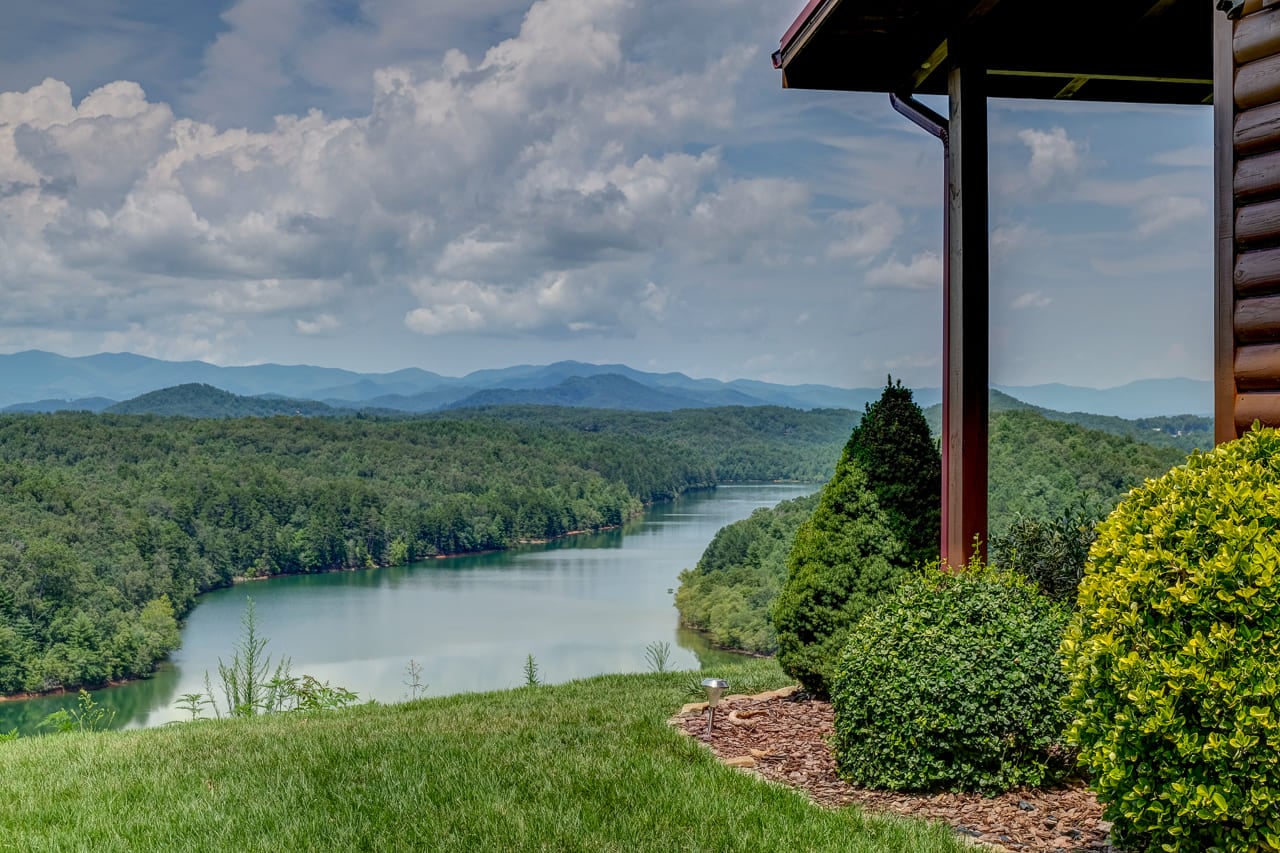
If you are shopping for a place on a mountain lake, the first thing to understand is that "lake property" is not one thing — it is a spectrum, and where a home sits on it shapes the price, the dock situation, and your daily routine. Lakefront vs lake access is one of the most common questions we hear from buyers new to the TVA reservoirs around Murphy — Lake Hiwassee in Cherokee County, Lake Chatuge straddling the NC-GA line at Hayesville and Hiawassee, and Lake Nottely in Union County, Georgia. Lakefront means the property touches the water directly, often with dock potential; lake-access means the home shares a community dock, ramp, or deeded access point; and lake-view means the property looks out over the water from up the slope without touching it. Each tier is a legitimate way to enjoy lake life, and the right one depends on your budget and how you actually want to spend your time.
Key Takeaways
- Lakefront property touches the water directly and may carry dock potential, at a premium price.
- Lake-access property shares a community dock, ramp, or deeded access at a lower entry point.
- Lake-view property overlooks the water from up the slope without direct frontage.
- On TVA lakes, even lakefront does not guarantee a dock — permits are separate.
- The best tier depends on your budget and how you want to use the lake day to day.
What is lakefront property?
Lakefront is the most coveted tier: the property line meets the water, so the lake is effectively your back yard. This is the option for buyers who want to step from their own land to the shoreline, and it sometimes comes with an existing dock or the potential to pursue one. That direct frontage commands the highest prices, because it is the most limited and most desirable form of lake property — and on the protected lakes of this region, where much of the shoreline is national forest or under TVA control, true lakefront can be genuinely scarce. Bonnie DuPree, who has been guiding lake buyers across Cherokee, Clay, and Union counties since 2007, will point out one crucial caveat that trips up buyers on the TVA reservoirs: **owning lakefront does not automatically grant the right to a dock**. Because TVA controls the shoreline, any dock must be permitted, and an existing one should be confirmed as permitted and transferable. Lakefront offers the closest connection to the water, but the specifics of dock rights are something to verify carefully rather than assume.
What is lake-access property?
Lake-access property offers the lake lifestyle at a more accessible price by sharing the water rather than owning frontage. These homes sit in communities or subdivisions that provide a common amenity — a shared community dock, a boat ramp, a day-use area, or a deeded access point — so residents can get on the water without paying the full lakefront premium. For many buyers around Lake Hiwassee, Lake Chatuge, and Lake Nottely, this is the sweet spot: you can keep or launch a boat, swim, and enjoy the lake regularly, often for considerably less than direct frontage costs. The trade-offs are that you do not have the water at your own back door, the shared facilities come with community or HOA rules governing their use, and a slip or dock space may be assigned, waitlisted, or shared. It is worth understanding exactly what the access includes — is there a boat slip, how is it allocated, what are the dues and rules — before you buy, since "lake access" can mean very different things from one community to the next.
What is lake-view property?
Lake-view property trades direct contact with the water for the pleasure of looking out over it, usually from a home set up the slope or on a ridge. You get the scenery — often a sweeping, elevated vista that a lakefront home tucked at water level cannot match — without frontage or dock rights, and typically at a lower price than lakefront. For buyers who love the sight of the water more than the need to launch a boat from their own property, or who simply prefer an elevated perch and a long view, lake-view can be ideal. Some lake-view homes are in communities that offer separate lake access, combining the elevated view with a way to get on the water, so it is worth checking. The key is to be clear-eyed about what "lake view" means for a specific property: how much of the lake is actually visible, whether the view is year-round or partly seasonal (screened by summer foliage), and how far the walk or drive is to the nearest public or community access.
Comparing the three at a glance
| Factor | Lakefront | Lake-access | Lake-view |
|---|---|---|---|
| Water contact | Direct frontage | Shared access point | View only, up the slope |
| Dock | Possible (TVA permit required) | Shared/community dock | None (unless separate access) |
| Relative price | Highest | Moderate | Often lower |
| Daily routine | Step to the water | Short walk/drive to access | Enjoy the view; travel to launch |
| Governed by | TVA shoreline rules | HOA/community rules | Standard property rules |
Which is right for you?
There is no universally "best" tier — only the best fit for how you will use the lake and what you want to spend. Ask yourself a few honest questions: Do you want to walk out your door to a boat, or is being near the water enough? How important is having your own dock versus sharing one? Is the elevated, long-range view actually more appealing to you than water-level frontage? How much does the price difference matter to your overall plan? Someone who plans to be on the water daily with their own boat may find lakefront worth the premium, while someone who values the view and visits the water on weekends might be happier with a lake-view or lake-access home — and the money saved. There is also the resale angle: each tier appeals to a different segment of future buyers. As an Accredited Buyer's Representative (ABR) and Resort & Second-Home Property Specialist (RSPS), Bonnie helps buyers match the property to their real life rather than to a label.
A note on resale and long-term value
Beyond your own day-to-day enjoyment, it is worth thinking about how each tier tends to hold and grow in value, since most buyers eventually become sellers. True lakefront on Lake Hiwassee, Lake Chatuge, or Lake Nottely — especially where shoreline is protected by TVA and Nantahala National Forest — is the scarcest tier and tends to command the strongest long-term demand precisely because it cannot be created. A permitted, transferable dock adds to that scarcity and appeal. Lake-access property occupies a useful middle ground, offering a way onto the water at a more attainable price, which keeps it appealing to a broad pool of future buyers. Lake-view homes appeal to those who prize the vista and the value, and a genuinely spectacular, protected view carries its own lasting draw. None of this means one tier is a better "investment" than another in the abstract, since each serves a different buyer and budget. But understanding how scarcity, dock rights, and view quality shape demand helps you choose a property that you will enjoy and that should hold its appeal when it is eventually time to sell.
Frequently Asked Questions
What's the difference between lakefront and lake-access?
Lakefront property touches the water directly, with the lake as your own frontage and possible dock potential. Lake-access property shares a community dock, ramp, or deeded access point, offering the lake lifestyle at a lower price without direct frontage.
Is lake-view the same as lakefront?
No. Lake-view property overlooks the water from up the slope without touching it, so there is no frontage or dock, usually at a lower price than lakefront. The appeal is the elevated, often sweeping view rather than direct water access.
Does lakefront always include a dock on the TVA lakes?
No. On the region's TVA reservoirs — Lake Hiwassee, Lake Chatuge, and Lake Nottely — the TVA controls the shoreline, so owning lakefront does not automatically grant a dock. Any dock must be permitted, and an existing one should be confirmed as permitted and transferable before you buy.
Is lake-access cheaper than lakefront?
Generally, yes. Lake-access homes share facilities rather than owning frontage, so they typically cost less than direct lakefront while still offering a way to get on the water. Check exactly what the access includes and the community rules.
Which type of lake property is best?
It depends on your budget and how you will use the lake. Daily boaters may value lakefront, while those who prize the view or visit on weekends may prefer lake-view or lake-access. Match the property to your real routine and verify the specifics.
Meet Bonnie DuPree — a lake buyer's representative
Bonnie DuPree, REALTOR® and founder of The DuPree Real Estate Group at RE/MAX Town & Country in Murphy, NC, has been helping buyers find their place across Western North Carolina and Northeast Georgia since 2007. As an Accredited Buyer's Representative (ABR), Resort & Second-Home Property Specialist (RSPS), and Certified Luxury Home Marketing Specialist (CLHMS), she works the TVA lakes and mountain communities of Cherokee, Clay, and Graham counties in NC and Union, Fannin, and Towns counties in NE Georgia. The DuPree team runs on a specialist "One Thing" model — each stage of the transaction handled by a team member whose focus is exactly that.
Find your spot on the water
Understanding these tiers is the first step to finding the right lake home for your life and budget. When you are ready, you can read our guides to Lake Chatuge and Lake Hiwassee, browse current lake listings, or reach out to Bonnie DuPree to talk through which tier fits how you want to spend your time on the water.
The DuPree Real Estate Group is pledged to the letter and spirit of U.S. policy for the achievement of equal housing opportunity. Bonnie DuPree, REALTOR® · RE/MAX Town & Country · Each Office Independently Owned and Operated.
Check out this article next