

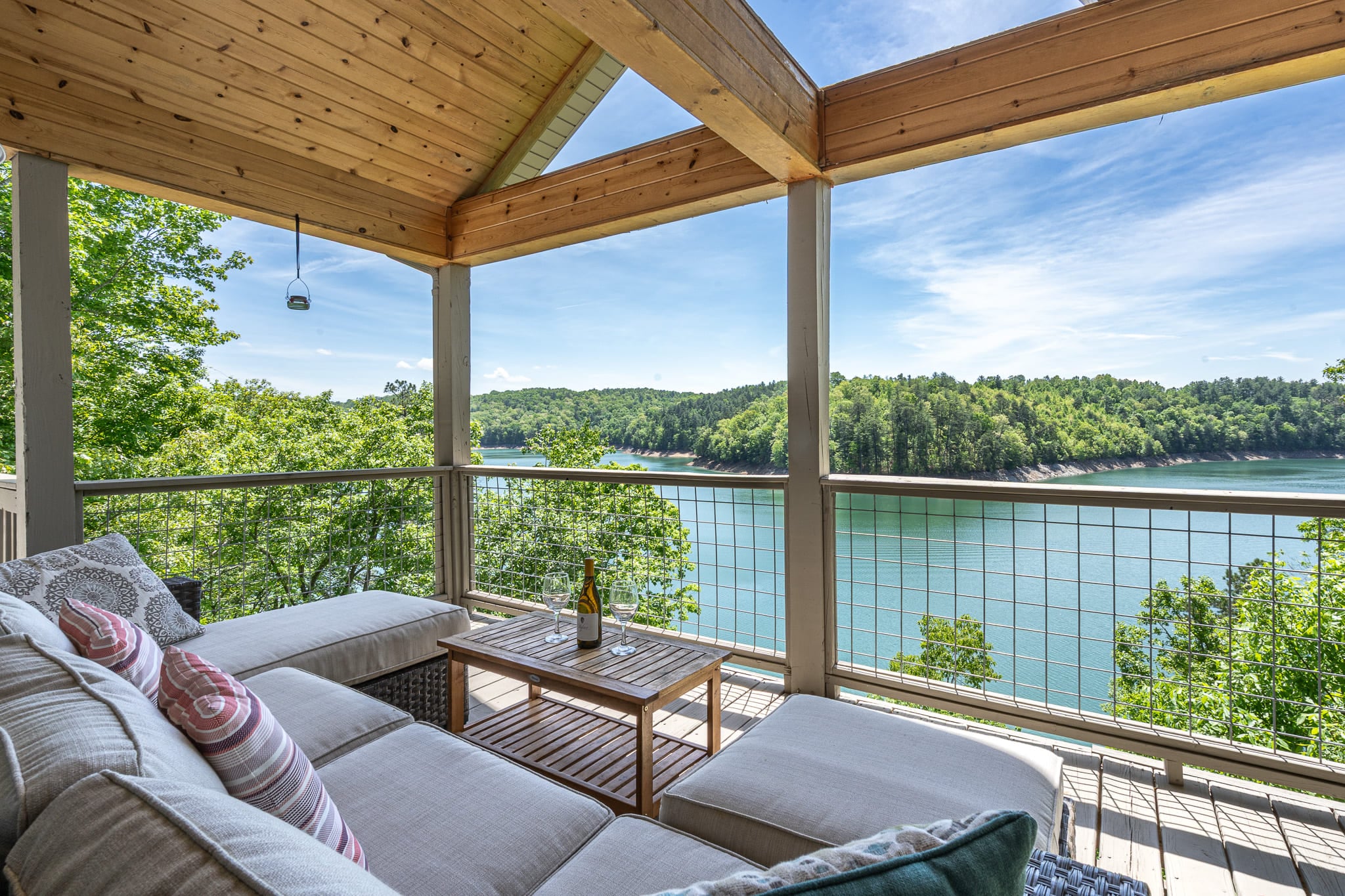
Two lakefront homes can sit a quarter-mile apart and carry very different values — and the reasons usually have little to do with the house itself. What drives the value of a lakefront home is largely the water: how much frontage you have, how deep it stays through the seasons, whether the dock is permitted, which way the view faces, and how the shoreline changes with drawdown. Understanding these factors helps sellers price with confidence and helps buyers see why one property commands a premium over another. On the mountain lakes of Western North Carolina and Northeast Georgia, these details matter more than almost anywhere.
Key Takeaways
- Frontage length and the usable shoreline often matter more than lot size alone.
- Water depth at the shoreline determines whether a dock and a boat are practical year-round.
- A permitted, transferable dock can add meaningful value; an unpermitted one can subtract it.
- View orientation, privacy, and how drawdown exposes the shoreline all influence value.
- Access, the home itself, and the surrounding setting round out the picture.
Frontage and usable shoreline
The first number most lakefront buyers ask about is frontage — the length of shoreline that comes with the property. More frontage generally means more privacy, more flexibility for a dock, and a stronger sense of owning a piece of the water, so it tends to carry a premium. But raw footage isn't the whole story. A long stretch of steep, rocky bank that drops hard to the water is less valuable in practice than a shorter run of gentle, usable shoreline where you can actually walk down, launch a kayak, or sit by the water. When you evaluate frontage, look at how much of it is genuinely usable: the slope, the bank, and whether you can get from the yard to the water without a feat of engineering. That usable quality often separates two otherwise similar listings.
Water depth and the shoreline
Depth at the shoreline is one of the most overlooked value drivers, and on mountain reservoirs it's crucial. A property with deep, stable water at the dock can keep a boat in the water through the season; one in a shallow cove or a back channel may sit on mudflats when levels drop. Because these lakes are managed reservoirs, the depth you see on a summer afternoon isn't a constant — it shifts as the water is drawn down toward winter. Buyers increasingly ask to see a property in more than one season, or to review depth information, before they commit. For sellers, being able to speak honestly to year-round depth at your shoreline is a genuine asset; for buyers, it's a question worth pressing well before an offer.
The dock and its permit status
On a mountain lake, the dock is often where real value lives — and where real risk hides. Many of these lakes are managed by the Tennessee Valley Authority or a private hydropower licensee, not the homeowner, so docks require permits and aren't automatic with waterfront ownership. A permitted dock that transfers cleanly to a new owner can add substantial value, because it can't simply be replicated next door. An existing dock that turns out to be unpermitted, non-conforming, or non-transferable can do the opposite, becoming a problem to resolve rather than an asset. The same is true of dock potential on a property without one: the value depends entirely on whether the controlling authority would actually allow a dock there. This is why confirming permit status and shoreline rules is among the most important steps in any lakefront transaction.
View, orientation, and privacy
Beyond the water's edge, the experience of the property shapes its value. A few factors tend to matter most:
- View quality — a long, open view down a channel or across a wide cove generally outvalues a tight, tree-screened glimpse of water.
- Orientation — which way the home and dock face affects light, afternoon sun, and how the view reads at different hours.
- Privacy — neighboring docks close at hand versus a quiet, protected cove changes the daily feel and the value.
- Exposure to drawdown — how much shoreline emerges in winter, and how that looks from the home, affects year-round enjoyment.
None of these is a simple plus or minus; together they explain why two homes with identical square footage can sit at different price points.
Access, the home, and the setting
The water leads the valuation, but the rest of the property still counts. How you reach the home matters: a paved, county-maintained road is easier to live with year-round than a steep private drive that demands care in winter, and access influences both value and the pool of interested buyers. The house itself — its condition, layout, how well it captures the view, and whether the main living areas and primary suite take advantage of the water — adds or subtracts in the usual ways. So does the broader setting: proximity to a marina, a town, or protected national-forest shoreline that guarantees the view next door will never be built on. On these lakes, a permanent forest neighbor can be worth as much as any single feature of the house, because it protects the very thing that drew the buyer to the water in the first place.
Lakefront value at a glance
Here's a simple way to weigh the factors when you're comparing properties or preparing to sell:
| Factor | Tends to add value | Tends to subtract |
|---|---|---|
| Frontage | Long, gentle, usable shoreline | Short or steep, hard-to-reach bank |
| Water depth | Deep, stable through the seasons | Shallow; mudflats at drawdown |
| Dock | Permitted and transferable | Unpermitted or non-transferable |
| View & privacy | Open view; quiet, protected cove | Screened view; crowded shoreline |
| Access | Paved, maintained road | Steep, difficult private drive |
Pricing and presenting a lakefront home well
Because lakefront value rests so heavily on the water, getting the price right starts with an honest reading of your own shoreline rather than a square-foot formula. The comparable sales that anchor a price need to be true peers — homes with similar frontage quality, depth, dock status, and view orientation — and even then, small differences in how the water lives can move the number meaningfully. A home that holds deep water and a usable, gently sloping shoreline simply offers more than one whose frontage turns to mud flats in winter, and pricing should reflect that reality in both directions. Presentation matters just as much: photography that captures the frontage, the dock, and the view at the right hour helps the right buyer recognize what they're paying for, while honest disclosure of dock permits and seasonal levels builds the trust that keeps a deal together. For sellers, the goal is to make the home's genuine strengths legible and to set expectations accurately on the things buyers will scrutinize anyway. For buyers, the same clarity is what lets you compare two very different shorelines on equal footing. Either way, the water is the story — and telling it accurately serves everyone.
How these factors work together
No single factor sets a lakefront home's value on its own — they interact, sometimes in ways that surprise people. A property with modest frontage but deep, stable water, a permitted dock, and an open view down a channel can easily outvalue a home with twice the frontage on a shallow, exposed cove. A beautiful house can be held back by a difficult access road; a modest cabin can command a premium because it sits on a protected point with a forever-wild forest view across the water. This is why pricing a lakefront home well is less about a single number per foot of frontage and more about reading the whole picture — the water, the dock, the view, the access, and the home together. For sellers, that means the goal is to understand and document your property's specific strengths so they're clear to buyers and their agents. For buyers, it means looking past the listing photos to the factors that will actually shape your enjoyment and the home's future value. A thoughtful comparison of two or three properties, factor by factor, usually reveals why the prices differ — and which one is genuinely the better buy for you.
Frequently Asked Questions
Does more lake frontage always mean more value?
Usually it helps, but usable frontage matters more than raw length. A shorter run of gentle, accessible shoreline can be worth more than a long stretch of steep, rocky bank that's hard to reach.
Why does a dock permit affect value so much?
On TVA- and licensee-managed lakes, docks require permits and aren't automatic with ownership. A permitted, transferable dock adds value because it can't simply be recreated, while an unpermitted one can become a costly problem.
How does drawdown influence a lakefront home's value?
Seasonal drawdown changes how much shoreline is exposed and whether the water stays deep enough at the dock. Properties that hold deep, attractive water year-round generally show and value better than those that reveal mudflats in winter.
What should I document before selling a lakefront home?
Gather dock permit records and transferability details, any depth information, and the usual home and systems records. Being able to answer water and dock questions clearly keeps negotiations focused.
Is the house or the water more important to value?
On lakefront property, the water usually leads — frontage, depth, dock, and view — while the home, access, and setting refine the figure. Both matter, but the water is what makes it lakefront.
Pricing and buying with confidence
Whether you're preparing to sell or weighing an offer, understanding what drives lakefront value turns a guess into a decision. The DuPree Real Estate Group works across the region's lakes and can help you read these factors on a specific property. When you're ready, reach out to Bonnie DuPree or explore current lake listings to see how these details play out in today's market.
The DuPree Real Estate Group is pledged to the letter and spirit of U.S. policy for the achievement of equal housing opportunity. Bonnie DuPree, REALTOR® · RE/MAX Town & Country · Each Office Independently Owned and Operated.
Check out this article next