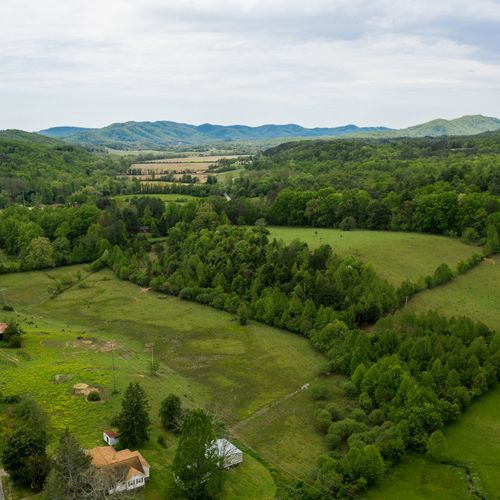

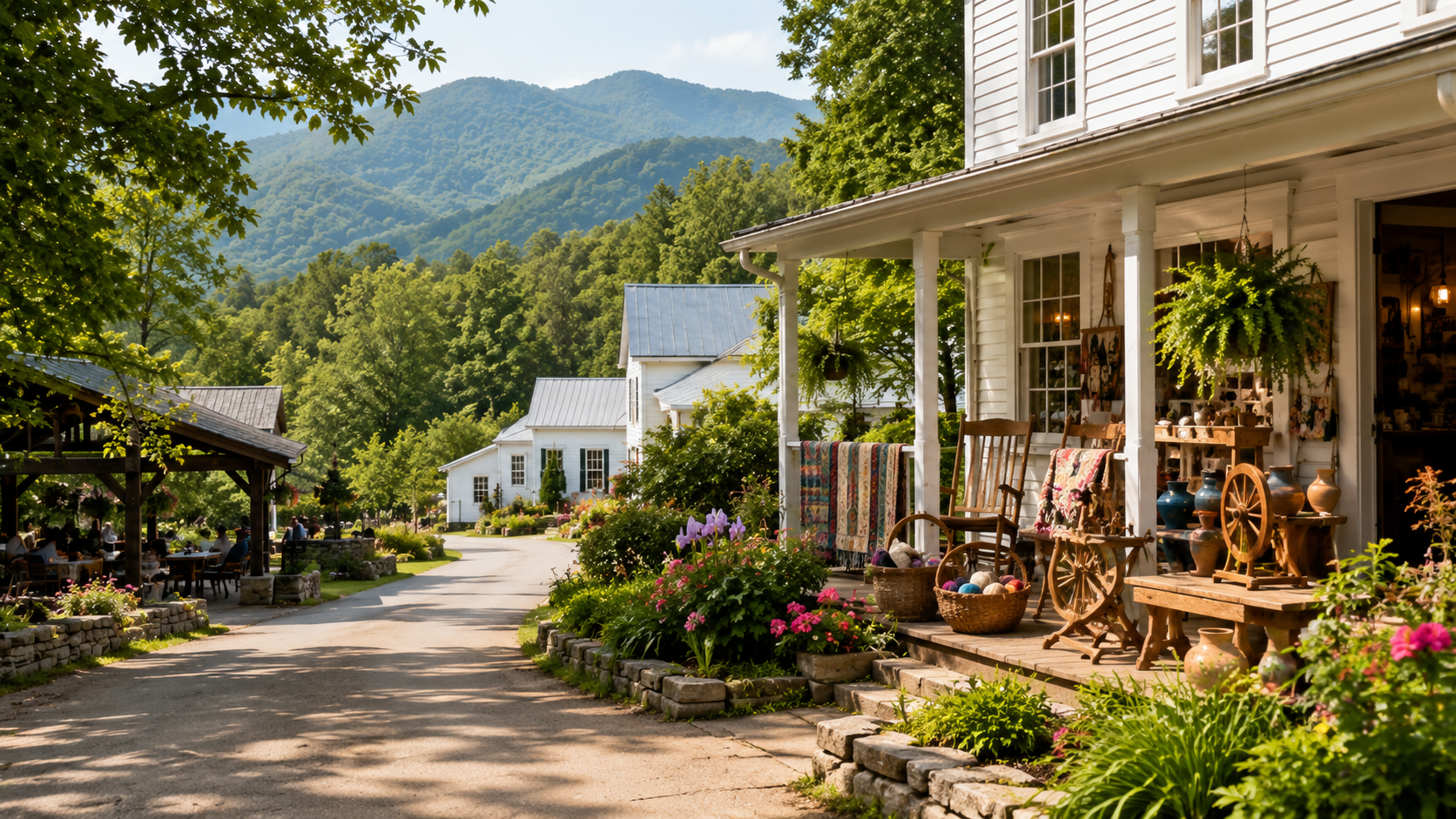
One of the quiet pleasures of living in Cherokee County is realizing you're fifteen minutes from one of the most remarkable cultural institutions in the country. The John C. Campbell Folk School — the oldest folk school in America, founded in 1925 on roughly 300 acres in Brasstown just south of Murphy on US-64 — is the kind of anchor most towns wish they had and few actually do. For visitors, it's a stop on a weekend itinerary. For residents of Cherokee County, it's a place you drop into for a Friday concert, wander through on a spring afternoon, or eventually sign up for a week-long class in something you've always wanted to try. If you've been considering a mountain home near Murphy, having the Folk School fifteen minutes away is one of the specific things that shapes daily life here — and one of the reasons a lot of buyers say Cherokee County feels different from the mountain towns they compared it to.
Key Takeaways
- The Folk School sits in Brasstown, about 15 minutes south of downtown Murphy via US-64 — genuinely close, not "close for the mountains."
- Founded 1925; oldest folk school in America; teaches adults traditional and contemporary craft, art, music, and dance in a non-competitive setting.
- For residents, the campus is a recurring destination — Craft Shop, History Center, trails, and public events, not a one-time visit.
- Friday concerts and community dances are part of the local cultural calendar residents build a week around.
- Proximity to an institution like this quietly shapes the case for a mountain home in Cherokee County versus other mountain markets.
Why living fifteen minutes away is different from visiting
A weekend visitor to the Folk School gets one thing — the campus tour, a stop at the Craft Shop, maybe a Saturday morning demonstration. It's a lovely afternoon. A resident of Cherokee County gets something else entirely. The Folk School stops being a destination and starts being a rhythm: the Friday concert you drop into on a whim, the spring walk through Little Brasstown Creek to see the sculptures, the class catalog you actually take seriously because you can enroll in a Tuesday-to-Thursday session and be home for dinner every night. Bonnie DuPree, who has been introducing buyers to Cherokee County since 2007, will tell you that the Folk School is one of the specific institutions she brings up in first-visit conversations — not because it's the reason to move, but because it's a good shorthand for what the area actually offers residents that many mountain communities don't. That fifteen-minute drive down US-64 into Brasstown is the difference between a place that has a famous cultural institution and a place where a famous cultural institution is part of daily life.
What the Folk School actually is
The John C. Campbell Folk School was founded in 1925 by Olive Dame Campbell, in memory of her husband John C. Campbell, on the model of the Danish "folkehøjskole" — schools for life. A century on, it is the oldest and largest folk school in America, listed on the National Register of Historic Places, and unusually well-preserved as a working institution: the mission that Olive Campbell articulated — celebrating the crafts, music, and traditions of the mountains through joyful, non-competitive learning — still runs the place. The campus of roughly 300 acres of rolling pasture and woods sits along Little Brasstown Creek and straddles the Cherokee and Clay County line. The school teaches adults; there are no grades, no credits, and no competition — just week-long and weekend classes taught by expert instructors across some fifty categories, with students typically staying on campus in shared housing and eating family-style. For a resident, the "no competition" ethos is part of the appeal — it's genuinely relaxing to spend a week in a place where the point is the making, not the ranking.
What you can actually take a class in
The class catalog is astonishing — more than 800 offerings a year across some fifty categories. For a resident, the practical value of proximity is that you can sign up for something you've wanted to try for years without booking flights or a hotel:
- Traditional craft — blacksmithing, woodworking, pottery, basketry, weaving, and more.
- Art and writing — painting, drawing, photography, calligraphy, bookmaking, storytelling.
- Music and dance — fiddle, hammered dulcimer, banjo, clogging, contra dance.
- Cooking, gardening, and nature — culinary, gardening, nature studies.
Residents often take a class or two a year, sometimes trying a completely new medium for the joy of it, sometimes going deep on one they've built into a real practice. The fact that you can drive home for the night if you want to is a small but real perk of proximity — most out-of-state students commit to campus housing for the week. Confirm the current catalog and schedule directly when you plan.
The campus as a recurring destination
Even if you never take a class, the campus itself is a resource for residents. The Craft Shop is the practical anchor — a genuinely excellent gallery of handcrafted work from hundreds of regional and national artists (including the Brasstown Carvers, whose whittled animals are a beloved local tradition), and the natural place to shop for holiday gifts, wedding presents, or the piece of pottery that will end up on your dining table for the next twenty years. The History Center tells the school's story through exhibits, historic photographs, and film. Easy nature trails, including a creekside walk with sculptures honoring local Cherokee heritage, wind through the campus and are open during daylight hours. The self-guided walking tour lets you explore at your own pace. The school has also opened a space in downtown Murphy showcasing the work of Appalachian artists, which is worth adding to a downtown Saturday. For residents, the pattern is usually a spring campus walk, a fall Craft Shop trip for gifts, and one or two visits in between for whatever caught your eye. Confirm current visiting hours before you go.
Music, dance, and the community calendar
Beyond classes and casual visits, the Folk School is a genuine community gathering place, hosting hundreds of public events each year that anyone can attend. For residents, these are part of the ongoing cultural calendar — not one-off tourist attractions:
| Event | What residents do with it |
|---|---|
| Friday concerts | Drop-in evening out; regular concert series |
| Community dances | Contra and traditional dances in the historic dance hall — a real local scene |
| Fall Festival | Annual celebration of craft, music, and food — put it on the calendar |
| Demonstrations & talks | Seasonal programming through the year |
A Friday concert at the Folk School is the kind of low-key resident evening — twenty minutes down US-64, park easily, hear real live music, drive home under the stars — that quietly makes a place feel like home. Check the current calendar for dates, times, and ticketing.
What proximity to a cultural anchor actually means for a home search
Buyers thinking about a mountain home often ask what daily life would look like — and the honest answer is that living around Murphy comes with cultural amenities most mountain towns of its size don't have. That's not marketing language; it's a specific reality shaped by the fact that the Folk School has been a working institution in Brasstown for a hundred years. From a Cherokee County home, you're fifteen minutes from a nationally significant cultural institution, ten minutes from downtown Murphy with its own gallery and arts scene, and within reasonable drives of the arts communities in Blue Ridge and Hayesville. That density of cultural life — combined with the region's outdoors and its lakes — is what a lot of buyers are actually shopping for when they say they want a mountain home that "isn't just a cabin." When Bonnie's team walks buyers through the area, we often build a first-visit itinerary that includes the Folk School Craft Shop or a Friday concert — not because we're selling those things, but because they let buyers feel what a resident's week here actually contains.
A resident's yearly relationship with the Folk School
To make it concrete: a common yearly pattern for a Cherokee County resident might include a spring campus walk when the wildflowers are up along Little Brasstown Creek, a summer Friday concert or two, a fall visit to the annual festival, a Craft Shop stop before the holidays for gifts, and — if you're serious about it — a week-long class in something you've always wanted to try. Some residents build a deeper relationship: taking multiple classes a year, volunteering, serving on committees. Others engage lightly — a few visits a year that keep the connection alive. Either is fine. The point is that the institution is close enough to be a real ongoing part of your life if you want it to be, in a way that would be logistically impossible from Atlanta or Charlotte. Pair a Folk School Friday with an early Saturday morning stop at the Murphy Farmers Market at the L&N Depot on Tennessee Street and you have the shape of a very good local weekend.
Frequently Asked Questions
How far is the John C. Campbell Folk School from Murphy, NC?
About fifteen minutes south of downtown Murphy via US-64. The campus sits in Brasstown, straddling the Cherokee and Clay County line — easy access for residents anywhere in the greater Murphy area, and a genuinely short drive for anyone living in Cherokee County.
Do I have to take a class to visit the Folk School?
No. The campus welcomes day visitors during daylight hours to enjoy the Craft Shop, the History Center, and the nature trails, plus a self-guided walking tour. Friday concerts and community dances are open to the public. It's a real ongoing resource for residents, not just students.
Is proximity to a cultural institution like this a real factor in mountain home buying?
For many buyers, yes — especially those who want a mountain home that offers real cultural life alongside the outdoor lifestyle. Living fifteen minutes from a nationally significant folk school is the kind of thing that quietly differentiates Cherokee County from other mountain markets.
What kinds of classes can adults take at the Folk School?
More than 800 a year across about fifty categories — blacksmithing, woodworking, pottery, weaving, painting, photography, music, dance, cooking, gardening, writing, and much more — for adults of all skill levels in a supportive, non-competitive setting.
Are the Folk School concerts and dances part of the local scene?
Yes — they're a genuine part of Cherokee County's cultural calendar. The regular Friday concert series, community contra and traditional dances in the historic dance hall, and the annual fall festival are all attended by residents as ongoing local events, not just visitor attractions.
Meet Bonnie DuPree — helping people trade "visit" for "home"
Based in Murphy, NC — the county seat of Cherokee County — Bonnie DuPree has been helping buyers turn "we love visiting" into "we live here" since 2007 as founder of The DuPree Real Estate Group at RE/MAX Town & Country. As a Resort & Second-Home Property Specialist (RSPS), Accredited Buyer's Representative (ABR), and Certified Luxury Home Marketing Specialist (CLHMS), her full service area extends across Cherokee, Clay, and Graham counties in NC and Union, Fannin, and Towns counties in Northeast Georgia. The DuPree team runs on a specialist "One Thing" model — each stage of the transaction handled by a team member whose focus is exactly that.
If living fifteen minutes from all this sounds right
The Folk School is one of the specific reasons life around Murphy feels the way it does. If having a genuine cultural anchor down the road sounds like the kind of daily life you're looking for, you can browse current listings around Murphy and Brasstown, read our guides to Lake Hiwassee and Lake Chatuge, or reach out to Bonnie DuPree to talk through what daily life here could look like.
The DuPree Real Estate Group is pledged to the letter and spirit of U.S. policy for the achievement of equal housing opportunity. Bonnie DuPree, REALTOR® · RE/MAX Town & Country · Each Office Independently Owned and Operated.
Check out this article next