

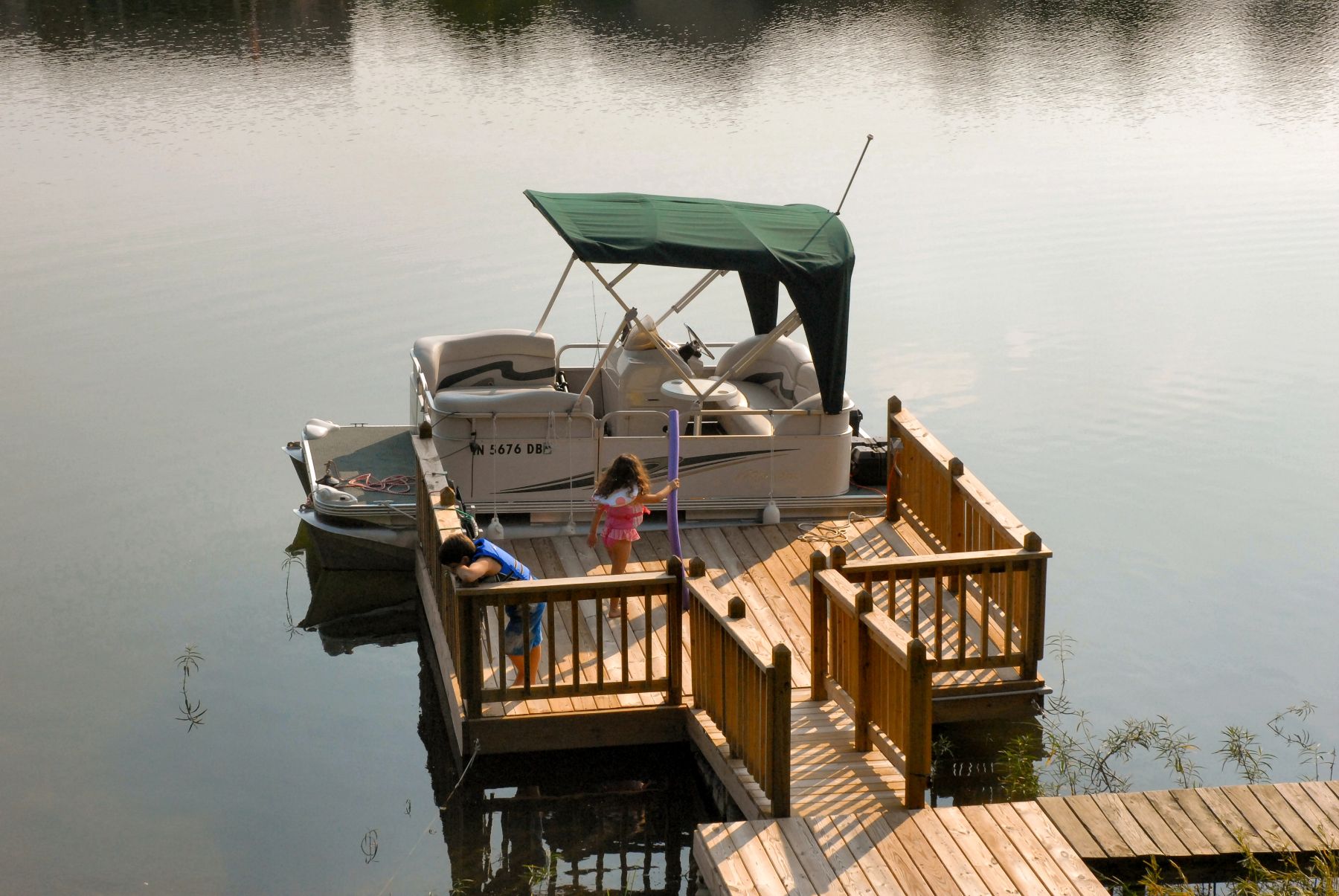
It's the single most important thing to understand before buying lakefront on a TVA reservoir — and the thing that surprises the most buyers: owning the land at the water's edge does not automatically mean you own the right to a dock. A TVA dock permit is required because the Tennessee Valley Authority, not the individual homeowner, regulates the shoreline and the structures on it. On lakes like Hiwassee, Chatuge, and Nottely, that means a dock must be permitted, an existing dock should be confirmed as permitted and transferable, and "dock potential" is only as real as what the TVA would actually allow. Here's what every lakefront buyer should know. It's the kind of detail that separates a confident lakefront purchase from an expensive surprise, and understanding it up front is one of the most valuable things a buyer on these lakes can do.
Key Takeaways
- On a TVA reservoir, the TVA — not the homeowner — regulates the shoreline and docks.
- Owning lakefront land does not automatically grant the right to build or keep a dock.
- An existing dock should be confirmed as permitted, compliant, and transferable to you.
- "Dock potential" depends entirely on what the TVA would permit for that specific shoreline.
- TVA rules can change, so always confirm the current requirements and a property's status before you offer.
Why the TVA controls the shoreline
The lakes that define this region — Hiwassee, Chatuge, Nottely, Apalachia — aren't natural lakes; they're reservoirs created by the Tennessee Valley Authority, a federal entity, by damming rivers for flood control, power, and recreation. Because of that, the TVA owns or controls the land below a certain elevation and manages the shoreline and the water itself. A private homeowner's property typically ends at or near the high-water mark, and the strip between there and the water, along with the lakebed, falls under TVA jurisdiction. This is fundamentally different from a private lake, where the homeowner might control their own shoreline. The practical upshot: anything built on or over that TVA-managed shoreline — a dock, a seawall, steps to the water — generally requires TVA authorization. Understanding this distinction is the foundation of buying lakefront here, and it's why dock rights deserve careful attention rather than assumption.
Lakefront ownership vs. dock rights
The most common and costly misunderstanding is conflating two separate things: owning lakefront land and having the right to a dock. They don't automatically come together. A property can have genuine water frontage and still not be eligible for a dock, or an existing dock might not be properly permitted or transferable. Consider the possibilities a buyer might encounter:
- A permitted, transferable dock — the ideal: an existing dock with a current permit that conveys to you. Confirm the transfer process.
- An unpermitted or non-conforming dock — a structure that may need to be brought into compliance or removed, becoming a liability rather than an asset.
- Dock potential — a property without a dock that may or may not be eligible, depending entirely on TVA rules for that shoreline.
- No dock rights — frontage where a dock simply isn't permitted.
A neighbor's dock is not proof of your own rights — each property and stretch of shoreline is evaluated on its own.
How to confirm a dock's status
Before writing an offer on any waterfront property, the goal is to replace assumptions with documented facts. That means confirming whether an existing dock holds a current TVA permit, whether that permit transfers to a new owner and how, and whether the structure complies with current rules or has issues that would need to be resolved. For a property without a dock but marketed as having potential, it means finding out what the TVA would actually allow along that specific shoreline — which can depend on factors like the shoreline classification, water depth, and frontage. The TVA maintains the authoritative information on shoreline management and permits, so verifying directly with the current TVA guidance (and confirming the specific property's status) is the reliable path. This is precisely where experienced local representation pays off: knowing which questions to ask, of whom, and how to interpret the answers before you fall for the view. Don't rely on what the water looks like on a pretty afternoon.
Permitted vs. unpermitted: what's at stake
| Situation | What it means for you |
|---|---|
| Permitted, transferable dock | A genuine asset that adds value; confirm the transfer |
| Unpermitted / non-conforming | A potential cost or liability to resolve |
| Dock potential only | Value depends on what TVA would actually permit |
| No dock rights | Lakefront enjoyment without a private dock |
This is also why a permitted dock can add real value: it can't simply be recreated next door, so it's genuinely scarce.
Questions to ask before you offer
Pulling it together, a lakefront buyer on a TVA reservoir should get clear answers to a handful of questions before making an offer. Is there an existing dock, and does it hold a current TVA permit? Does that permit transfer to a new owner, and what's the process and any cost? Is the dock compliant with current rules, or are there issues to resolve? If there's no dock, what would the TVA allow along this specific shoreline — and is that a realistic plan or just hopeful marketing? How does the seasonal drawdown affect the water depth and usability at this dock or shoreline? And what do the current TVA shoreline-management rules say, since they can change over time? None of these questions should scare you off lakefront ownership — buying on these lakes is wonderful, and most transactions go smoothly. They're simply the due diligence that ensures the dock you're picturing actually exists, conveys, and is allowed. Getting solid answers up front is the difference between a confident purchase and an expensive surprise.
Why this matters so much to value
It's worth underscoring why dock status deserves this much attention: on a lake where the shoreline is federally managed, a permitted, transferable dock is a genuinely scarce and valuable asset, and its presence or absence can meaningfully affect both a property's price and its appeal. Two otherwise similar lakefront homes can be worth quite different amounts depending on whether one has a permitted dock and the other has only uncertain potential. That scarcity cuts both ways for a buyer. It means a property with a solid, conveying dock permit is worth paying attention to and may justify a stronger offer, because that right can't simply be recreated next door. And it means a property marketed on dock potential that turns out not to be permittable could leave you with frontage you can't use the way you imagined. Treating the dock question as central to your evaluation — not a detail to sort out later — protects both your enjoyment and your investment. In a lakefront market like this one, understanding the shoreline rules isn't a technicality; it's one of the most important pieces of knowledge a buyer can have.
This is also exactly the kind of situation where working with an agent who genuinely knows these lakes earns its keep. The questions around shoreline classification, permit transfers, drawdown, and what the managing authority will and won't allow are not intuitive, and the answers aren't always obvious from a listing or a pleasant afternoon at the water's edge. An experienced local representative knows where to look, whom to ask, and how to read the answers, so that by the time you write an offer you understand precisely what you're buying at the waterline. On a lakefront purchase, that clarity is worth as much as the view itself.
Frequently Asked Questions
Does buying lakefront on a TVA lake include a dock?
Not automatically. On a TVA reservoir, the TVA regulates the shoreline and docks, so owning the land doesn't grant dock rights by itself. Any dock must be permitted, and an existing one should be confirmed as permitted and transferable.
Why does the TVA control the shoreline?
Because lakes like Hiwassee, Chatuge, and Nottely are federal reservoirs the TVA created and manages for flood control, power, and recreation. The TVA controls the land below a certain elevation and the structures on the shoreline.
How do I know if a dock is permitted?
Confirm it directly: verify whether the dock holds a current TVA permit, whether the permit transfers to you and how, and whether the structure complies with current rules. The TVA maintains the authoritative information; verify before you offer.
What does dock potential really mean?
It means a property without a dock that may be eligible for one — but only if the TVA would actually permit a dock on that specific shoreline. Confirm what's allowed rather than assuming the potential is real.
Is a neighbor's dock proof I can have one?
No. Each property and stretch of shoreline is evaluated on its own under TVA rules, so a neighbor having a dock doesn't guarantee your eligibility. Confirm the status for the specific property you're considering.
Buy lakefront with confidence
Understanding TVA dock permits is the key to a confident lakefront purchase. The DuPree Real Estate Group knows these lakes and what to verify before you offer. When you're ready, you can read about the region's lakes, browse current lake listings, or reach out to Bonnie DuPree to talk through a specific property's dock and shoreline status.
The DuPree Real Estate Group is pledged to the letter and spirit of U.S. policy for the achievement of equal housing opportunity. Bonnie DuPree, REALTOR® · RE/MAX Town & Country · Each Office Independently Owned and Operated.
Check out this article next