

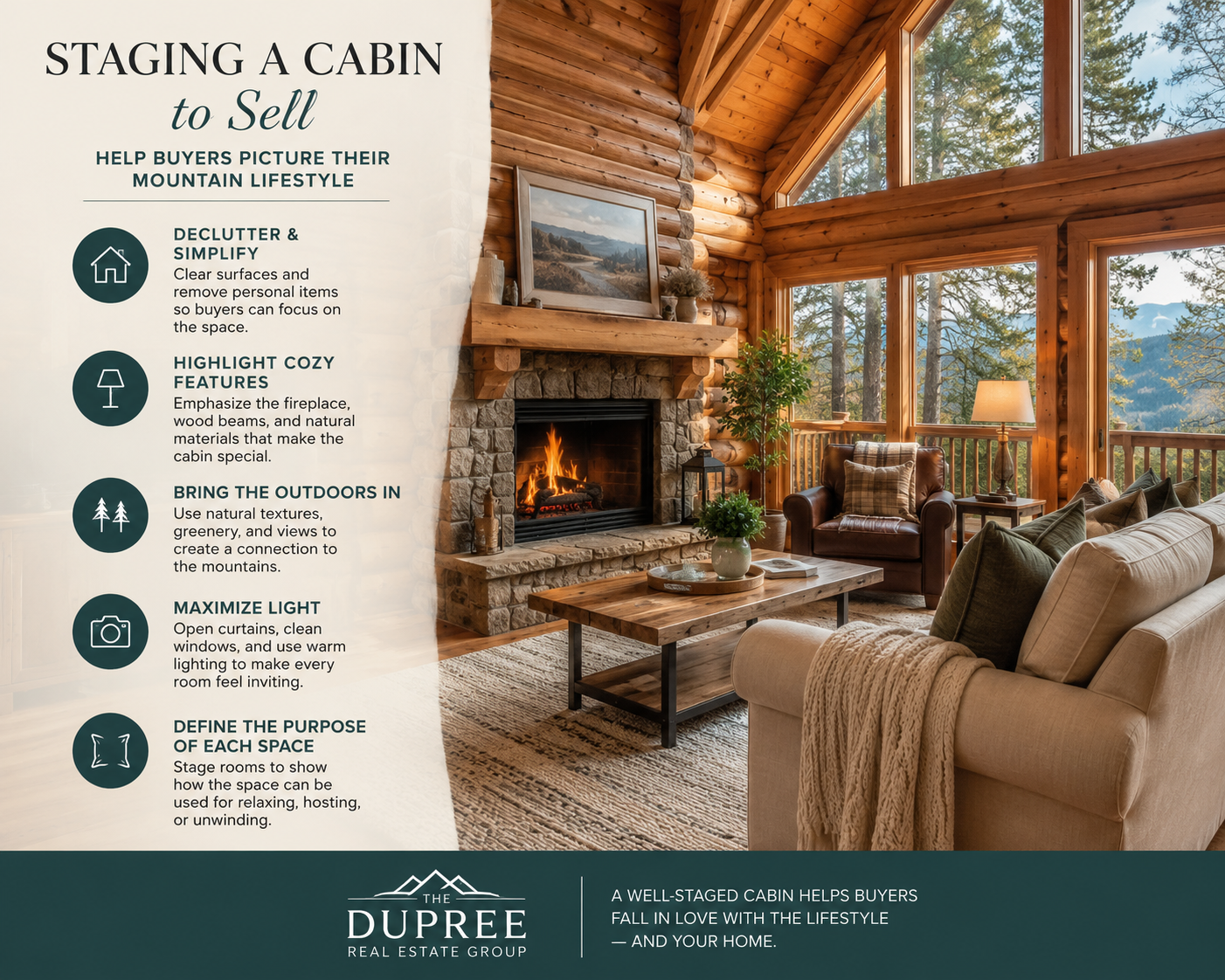
A cabin sells on a feeling — the warmth of wood, a fire laid in the hearth, a porch facing the ridge — and good staging is simply the art of making that feeling easy for a buyer to imagine as their own. Staging a cabin to sell in the mountains means leaning into the character that makes it special while keeping the space light, uncluttered, and inviting, and making sure the view and the outdoor living take center stage. The goal isn't to strip away the cozy mountain personality; it's to present it at its very best. Here's how to strike that balance.
Key Takeaways
- Lean into the cabin's character — wood, stone, and beams — rather than hiding it.
- Counter the natural darkness of wood interiors with light, clean windows, and brightness.
- Declutter and depersonalize so buyers can picture their own life in the space.
- Make the view and outdoor living spaces a centerpiece of the showing.
- Neutralize odors and keep the home fresh, especially if it sits empty between visits.
Celebrate the character — don't bury it
The first rule of staging a cabin is to let its best features speak. Exposed beams, a stone fireplace, tongue-and-groove walls, a soaring great-room ceiling — these are exactly what draws buyers to a mountain home, so don't crowd or cover them. Pull furniture away from a beautiful fireplace so it reads as the focal point, keep the mantel simple rather than cluttered, and arrange seating to highlight the architecture and the sightlines through the room. A few well-chosen, rustic-but-tasteful touches — a wool throw, a stack of split wood by the hearth, simple natural textures — reinforce the cabin feeling without tipping into clutter or theme-park kitsch. The aim is for a buyer to walk in and immediately feel the warmth and craft of the place, then picture their own evenings there. Authentic character, well presented, is a cabin's strongest selling point.
Bring in the light
The flip side of all that beautiful wood is that cabin interiors can read dark, which makes spaces feel smaller and less inviting. Counteracting that is one of the highest-impact things you can do:
- Open every blind and curtain, and clean the windows inside and out so the light — and the view — pour in.
- Raise the wattage in fixtures and lamps, and add light to dim corners, especially in wood-heavy rooms.
- Use lighter textiles — rugs, throws, cushions — to lift and balance dark walls and floors.
- Clean and, where appropriate, lightly refresh tired wood surfaces so they glow rather than absorb light.
A bright cabin feels both cozier and more spacious — a combination that photographs beautifully and shows even better in person.
Declutter, depersonalize, and right-size the furniture
Cabins are often smaller and more characterful than standard homes, which makes clutter and oversized furniture especially costly. Pare back to let the space breathe: clear surfaces, thin out the knickknacks and the accumulated gear of years of visits, and remove the most personal items so buyers can imagine themselves there rather than feeling like guests in someone else's retreat. Watch the scale of the furniture, too — a piece that's too big can make a cozy room feel cramped, while right-sized pieces make the same room feel comfortable and intentional. If the cabin is sparsely furnished or empty, a few well-placed pieces can help define how each space is used, since empty rooms can look smaller and colder than staged ones. The balance to aim for is lived-in warmth without the visual noise — enough to feel like a home, not so much that it feels full.
Make the view and the porch the stars
For most mountain cabins, the setting is half the product, so the staging shouldn't stop at the walls. Stage the porches, decks, and patios as genuine living spaces: a pair of rockers or Adirondack chairs facing the ridge, a small bistro set for morning coffee, a clean grill, maybe a fire pit laid and ready. Pressure-wash the deck and sweep the steps so the outdoor areas look cared-for and usable. Inside, arrange the furniture to draw the eye toward the windows that frame the best views, and keep those windows unobstructed by heavy treatments. If the view has grown in over the seasons, a little careful, permitted clearing of a few limbs can reopen a sightline that sells the whole property. When a buyer steps onto the porch at golden hour and the mountains line up just so, you want nothing standing between them and that feeling.
Keep it fresh — especially if it sits empty
Many cabins are second homes that sit quiet between visits, and a closed-up smell or a layer of dust can undo all your other efforts in the first ten seconds of a showing. Air the cabin out thoroughly before photos and showings, and neutralize the odors that accumulate in mountain homes — woodsmoke, dampness, anything left in the kitchen. A clean, fresh-smelling cabin reads as cared-for; a musty one raises doubts no matter how charming the beams. If you can't be there regularly, arrange for someone local to keep the home aired, clean, and show-ready through the listing window, and to run the systems so everything works when a buyer arrives. Fresh flowers or greenery, a faint clean scent, and good light go a long way toward making a sometimes-empty cabin feel warm and alive the moment someone walks in.
A cabin staging checklist
| Focus | What to do |
|---|---|
| Character | Highlight beams, stone, and the fireplace; keep accents simple |
| Light | Open blinds, clean windows, raise wattage, add lighter textiles |
| Space | Declutter, depersonalize, right-size the furniture |
| View & outdoors | Stage porches and decks; open sightlines to the windows |
| Freshness | Air out, neutralize odors, keep it show-ready |
The payoff: showings and photographs
All of this staging work pays off twice — once when buyers walk through the door, and again, just as importantly, on the screen where most of them meet the cabin first. A cabin that's been decluttered, brightened, and warmly staged photographs cleanly, and great photos are what earn the first showings in a market where many buyers shop from out of state. The cozy details you arrange — the throw on the chair, the wood by the hearth, the rockers facing the ridge — translate directly into images that make someone stop scrolling and want to see more. The sequence matters: finish the staging before the photographer arrives, so the pictures match what buyers find in person and build trust rather than disappointment. It's also worth thinking about how the cabin photographs at different times of day and in different seasons, since golden-hour light and a glowing twilight interior flatter a cabin enormously. When the staging and the media work together — the home prepared, the light right, the view open — a modest cabin can outshine larger, pricier listings that haven't been given the same care. Presentation, in other words, isn't separate from staging; it's the moment all that staging finally reaches the buyer.
It's worth remembering that staging a cabin isn't about disguising it as something it's not — buyers in this market are specifically seeking the warmth and character of a mountain home. The aim is simply to remove the distractions, add the light, and frame the best features so that what's already wonderful about the cabin comes through clearly. Done well, staging makes the home feel both more spacious and more inviting, which is exactly the combination that turns an online browser into an in-person visitor and, ultimately, a buyer.
Frequently Asked Questions
Should I make a cabin look less rustic to sell it?
No — the rustic character is usually the draw. The goal is to present it well: highlight the wood, stone, and beams while keeping the space light, uncluttered, and fresh so buyers can picture themselves there.
How do I keep a wood-heavy cabin from feeling dark?
Open every blind, clean the windows inside and out, raise the wattage in fixtures and lamps, and add lighter textiles like rugs and throws to balance the dark wood. Light makes a cabin feel both cozier and larger.
Should I stage the outdoor spaces too?
Yes. For most cabins the view and porches are half the appeal. Stage decks and patios as living spaces with seating facing the view, and clean them up so they read as usable, cared-for rooms.
Do I need to fully furnish an empty cabin?
Not fully, but a few well-placed pieces help. Empty rooms can look smaller and colder than staged ones, and light staging helps buyers understand how each space is meant to be used.
How important is smell when showing a cabin?
Very. A musty, closed-up odor can undo good staging instantly. Air the cabin out, neutralize woodsmoke and damp smells, and keep it fresh — especially if it sits empty between visits.
Showing your cabin at its best
Thoughtful staging helps a cabin's natural warmth come through to buyers — and it's easier with a team that knows what works here. The DuPree Real Estate Group offers staging guidance, marketing, and contract-to-close support tuned to mountain properties. When you're ready, reach out to Bonnie DuPree to talk through your cabin and a plan, or explore the local market to see how comparable homes are presented.
The DuPree Real Estate Group is pledged to the letter and spirit of U.S. policy for the achievement of equal housing opportunity. Bonnie DuPree, REALTOR® · RE/MAX Town & Country · Each Office Independently Owned and Operated.
Check out this article next